Here’s another excellent guest post from the Vacuous Wastrel:
Political Turnover Rate in the United States
America is, like a lot of democracies, a two-party country, more or less. There’s one party, and then there’s the other party, and people tend to consistently vote for one or for the other and that’s just how it is and always has been. Nothing special there. As I say, it’s common. It reflects in part the simple plurality (or ‘first past the post’) electoral system, which privileges the two largest parties, but also to a large extent the social cleavages within the nation.
That’s why most countries (not all, but most) with multi-party systems in practice tend most of the time have those parties line up in two blocs – one of the left, and one of the right, although in individual countries local issues may also play a role in defining how the blocs see themselves, and how they compete. [Long-term additional parties or blocs likewise tend to reflect additional cleavages – regional parties that reflect differences in national or ethnic identity, for example]
As a result of parties being based on underlying cleavages, parties tend to be static: the same people, and the same places, keep on voting for the same parties, or their successor parties. There are parts of the UK that have voted Conservative (or, before that, Tory) every election since the 1830s.
But parties aren’t fixed in stone, and the biggest example of that is the US (perhaps in part because historically both major parties were broadly ‘liberal’ middle-class parties, more flexible than the labour parties, agrarian parties or religious parties, or even conservative parties, found in most other democracies). It’s well known that the US has gone through several different ‘party systems’, in which its parties had different names, or drew from different bases of support, or competed on very different issues. What that means on the ground is that areas have gone from supporting one party to supporting another.
And that, excuse the longwindedness, is what I’ve just been intrigued by. How far do you have to go back before all the states in the US voted differently from how they do now? How often has such a complete turnover occurred? How quickly does it occur?
This isn’t an academic study, it’s just me looking at some historical election results. There are ambiguities around the edges, mostly around how you define which parties are the successors to which earlier parties – I’ve taken an inclusive, common sense line on succession, because I’m interested in real changes in voting, not just party rebrandings. And for my purposes here, I’m defining a “turnover” or “transition” as a period of time from Year X to Year Y, inclusive, when every state had been admitted to the union by Year X had voted for two different parties by Year Y – which means that during that time, no states (other than those that entered the union during that period) remained loyal to a single party. And the turnovers that have occurred are:
1: 1789 – 1820: the Connecticut / Delaware Transition
This one is nice and clear cut: in 1789, every single state voted for Washington’s Federalists; in 1820, every single state voted for Monroe’s Democratic-Republicans. I’ve called this the Connecticut/Delaware Transition, because those are the only two states that didn’t vote D-R in 1804 – the country was, as it were, kept waiting for those two states to switch allegiance. Because these transition periods are about both change and continuity: change in that across the period all states changed their votes, but continuity because they are defined by the end of a state’s loyalty – in this case, Connecticut and Delaware voted Federalist every election up to, but not including, 1820. This example turns out to be commonplace: often transitions revolve around a big wave election like 1804, with just a few loyal states that are then picked off more slowly later on.
2: 1796 – 1860: the Virginia Transition
The one-party state established during the C/D Transition eventually broke down. And by ‘eventually’, I mean the very next election, in 1824, when four different candidates ran, all nominally as Democratic-Republicans – the two new parties, the Democrats and the National Republicans, were only formalised for the 1828 cycle. I’ve chosen to consider the Democrats as the successor party to the D-Rs – the Democrat Jackson was the candidate with the most votes in 1828 (though he lost the election when the House settled on his rival, John Quincy Adams, instead), and the self-declared ‘Old Republicans’, who wanted to restore the perceived traditional values of the party, eventually sided with the Democrats, rather than with the National Republicans.
This transition therefore represents the loss of dominance by the D-R/Democratic Party and the rise of a sequence of new parties – National Republicans, Whigs, and finally Republicans. Virginia was the final hold-out, voting the same way for 64 years, before finally voting for the Constitutional Union Party on the eve of the civil war – it would take until 1872 before they finally went the whole way and voted Republican.
3: 1820-1868: the Alabama Transition
This transition can be seen as an extension of the second: it exists because several states entered the union after 1796, including a couple that would prove faithfully Democratic for decades: Missouri and Alabama. Missouri finally voted Republican in 1864, when Alabama was in secession; Alabama joined it the next cycle. The period represents the transition to a Republican-dominant system after the civil war.
4: 1828 – 1912: the Massachusetts Transition
The third transition may have left the Republicans dominant, but the Democrats were able to recover, and even to pick off traditionally Republican states. The transition ended with the unusual election of 1912: with the Republicans split into two parties, the Democrats under Wilson were able to make sweeping gains, including finally grabbing the Republican stronghold of Massachusetts, which had voted Republican (and before that Whig, and before that National Republican, and before that for the Adams faction) since 1828.
5: 1836 – 1964: the Vermont Transition
In the middle of the 20th century, power swung dramatically backward and forward, with the Democrats scoring crushing victories in 1932 and 1936, and Republicans doing likewise in 1928, 1952, and 1956. But each wave broke against the shores of the same enemy strongholds: the Democrat south and the Republican northeast. The final breakthrough didn’t come until LBJ’s sweeping victory in 1964, which finally knocked out the Republicans everywhere except, ironically, the south, and Arizona.
In the short term, the shift of the southern states to the Republicans looked more striking – but the southern states had already all voted Republican before, mostly in the aftermath of the civil war. The real hold-out was Vermont, which had been loyal to the Republicans (etc) since 1836. Remarkably, the only reason which this transition was so ‘short’ was that Vermont in 1832 had voted for the Anti-Masonic Party – the state had never actually voted Democrat before.
6: 1876 – 1968: the Arkansas Transition
Here’s the one that symbolises the loss of the Democrat south. After the initial post-civil-war confusion, the south went back to being soundly Democrat until the time of LBJ. Many southern states flipped in 1964, but Arkansas lasted until 1968, when it voted for Wallace’s American Independents. It went the whole way and voted Republican in 1972, not quite making it to the century mark…
7: 1952 – 1996: the Arizona Transition
While all that business with the south and the northeast was going on, something else had changed: Arizona, which had swung to the Democrats with FDR, swung back in the high-water Republican election of 1952. It wasn’t pried out of their hands again until Clinton’s re-election in 1996 (and that was a one-off). It’s actually a slightly bigger deal than it might seem: the most loyal of Eisenhower’s states in the far west (that is, the only one not to vote for Johnson in ’64), even its temporary loss is emblematic of the gradual transition of those Eisenhower states from Republican to Democrat: Washington and Oregon switched in ’88, California in ’92, and Nevada, Colorado and New Mexico have all become active states again. Montana and Arizona have both toyed with the Democrats, leaving only Utah and Idaho as loyal Eisenhower states (since ’64). And I guess Wyoming.
8: 1968 – ? : the Western Transition
We don’t know how long this transition will last, but I’m guessing it may take a while. The interesting thing is that the Republican stronghold this time (and this transition will be a matter of eroding Republican support – the current Democratic strongholds weren’t established until later) isn’t, in historical terms at least, the South at all, despite popular perception. The Southern states have already betrayed the Republicans: en masse to vote for Carter, and then piecemeal to vote for Clinton.
Instead, the historical core of Republican support in this transition has been in the west: the Wilkie states (that emerged as a bloc voting for Wilkie and then Dewey against Roosevelt and Truman) of Kansas, Nebraska, and North and South Dakota, plus the remaining Eisenhower states of Utah, Idaho and Wyoming. Plus Oklahoma, which also swung with Eisenhower but doesn’t really fit. Plus Alaska, which didn’t vote until 1960, but can probably be considered an Eisenhower state. All nine states went Democrat for Johnson in ’64, but switched back in ’68 and have never looked back. Not until all nine have voted Democrat at least once will the current transition be complete.
These nine states, with a combined population of 17.7 million in 2024, have voted the same way (Republican) in 15 consecutive elections, starting in 1968 and including 2024
Note: due to the way these transitions are calculated, for each starting year after one of the years listed above, there is a complete turnover by the end-point of the last-listed transition. Put plainly: the 1789 and 1792 situations were both completely turned over by 1820; the 1796, 1800, 1804, 1808, 1812 and 1816 situations were all turned over by 1860; 1820 and 1824 were both turned over by 1868; the elections from 1828 to 1836 were all turned over by 1912, and so on. And conversely, because the current unfinished cycle began in 1968, that means that 1964 is the most recent election outside this cycle – that is, since 1964 every state has voted both ways, but that is not the case since 1968.
From this we can calculate the slowest and quickest turnovers. The electoral map in 1836 was not completely overturned until 1964, a record 128 years of relative stability [other strongholds during this time included Alabama and Mississippi (minus some Reconstruction-era elections) and Georgia (minus a flirtation with the Whigs in the 1840s) for the Democrats, and Maine (again, minus some confusion in the 1840s) for the Whigs/Republicans]. At the other end of the spectrum, the quickest total turnover was between 1948 and 1968 – specifically, only 5 states didn’t vote the opposite way in 1956 and 1964, and two of those (West Virginia and Kentucky) flipped twice those eight years (the only three that stayed loyal through that crisis were North Carolina and Arkansas for the Democrats and Arizona for the Republicans). Three turnovers of less than 20 years were only narrowly avoided: only one state (Arizona) voted the same way for every election from 1956 to 1968, and only two states (Arizona and Massachusetts) voted the same way in 1964-1972.
Anyway, cut out some smaller overlapping transitions and this method gives you three grand cycles: 1789-1820; 1824-1872; 1872-1964; 1968-now. This takes us back to the beginning of this post, because those line up fairly decently with the 1st, 2nd, 3rd/4th/5th and 6th party systems (though this model has the 3rd starting a little later, once the system really gets fixed in place, rather than when the Republican Party is officially founded). Interestingly, the normal debate is about whether the 5th and 6th are really separate (and if so when the break occurred), whereas under these definitions that distinction is unavoidable, and the questions are really about the 3rd, 4th and 5th systems…
Those nine Republican-voting states, plus Minnesota, have voted the same way since 1976. (In 1972 Minnesota voted for Nixon, its only Republican vote for president since 1956. In 1984, Minnesota was the only state in the country not to vote for Reagan. Reagan’s 1984 opponent Mondale had been a Senator representing Minnesota (and later was Jimmy Carter’s Vice-President), and he still only got 4000 or so more votes there than Reagan did) 14 states have voted the same way since 1980, still all Republican except for Minnesota 20 states have voted the same way since 1988, when Washington, Oregon, Hawaii, New York, Rhode Island, and Massachusetts, having voted for Reagan in 1984 (and in 1980, except for Hawaii and Rhode Island), did not vote for George Bush Sr.
Note: this article uses total fertility rates, which are only projections of how many children a woman might have during her lifetime, based on current age-specific birth rates. It is only actually possible to know how many children a cohort of women will have in retrospect, once the cohort is past its childbearing years. That is called the completed cohort fertility rate, which can differ from the total fertility rate to a significant extent. Total fertility rates can therefore be misleading.
If constraints of wealth and health ever become dramatically reduced, would fertility rates still remain below replacement levels?
—
In a short period of time (relative to the length of human history), a tiny difference in fertility rates can lead to an enormous difference in population. If for example there were to be a sustained average fertility rate of 2.15 children per mother, the world’s population could reach about 70 billion by the year 3000*. Yet a slightly lower average fertility rate, of 2.05 children per mother, could bring the world population down below one billion – back to mid-19th century levels – over that same span of time. Keep extrapolating to the year 4000 and this minuscule difference in fertility rates would determine whether our population falls back into the millions or rises improbably (or impossibly) to the trillions.
Blue: human population size over the last 100,000 years, very roughly speaking (showing the Agricultural Revolution approximately 10,000 years ago); Red: human population size going forward* with a fertility rate of 2.15 children per mother on average; Orange: human population size in the future with a slightly lower average fertility rate of 2.05 children per mother
Put another way: if you were to extrapolate the current total fertility rates of the Dominican Republic (approximately 2.15) and Jamaica (2.05), then about two thousand years from now the world could have billions of Dominicans but only hundreds of Jamaicans
(*Hypothetically. And depending on a few other factors as well, such as infant mortality rates, average lifespans, and the ratio between male and female children. And assuming I didn’t bungle that math).
Obviously, fertility rates in the future won’t be the same in all places and all times. But considering the decisive effect that even a 0.1 difference in fertility rates could have over the course of a single millennium, it seems interesting to consider what fertility rates might become in the future, if the recent relationship between rising levels of wealth and falling numbers of children were to break down.
—
During the past fifty years, the world’s fertility rate has fallen from an average of approximately 4.6 children per woman in 1972 to an average of 2.3 children per woman today. In the next few years the world’s average may reach replacement levels (~2.1, in countries with low infant mortality rates and a relatively balanced ratio between boy and girl children) outside of Sub-Saharan Africa, where fertility rates are currently estimated to be 4.7. Even some of the most conservative of wealthy societies, such as American Mormons or Gulf-monarchy Arabs or religious (but not Orthodox) Israeli Jews, are approaching or have already reached replacement levels.
Many countries now have fertility rates as low as 0.8 (South Korea, the world’s lowest) – 1.8 (France, Europe’s highest). Fertility rates in the US and Brazil are both around 1.7. In Japan and much of Europe they are around 1.4. China’s fertility rate is somewhere between 1 and 1.7 (but probably closer to 1), down from 2.7 when it began its one-child policy in 1979, and down from 6 a decade before that, during the middle of the Cultural Revolution. India’s fertility rate is roughly 2.2, down from 5.2 when its own mass sterilization program began in 1975. Northeast China, China’s rust belt, a region of 110 million people, may have a fertility rate as low as 0.55!
To a certain extent, the relationship between high income and low fertility has already begun to break down. Northeast China, a relatively poor part of what is still a relatively poor country, is only the most extreme example of this. Many of the world’s medium-income and low-income countries now have fertility rates that are nearly as low as, or lower than, those in rich countries. With the exception of Sub-Saharan Africa and a few small Pacific island states like Samoa, only two countries, Afghanistan and Yemen, remain above a 3.5 fertility rate.
Even in Africa, 16 countries’ fertility rates are thought to have fallen below 3.5. Ethiopia, the second most populous African country, is estimated to have a fertility rate of 3.9. The world’s biggest outliers by far are Nigeria at 5.2 and the Democratic Republic of the Congo at 5.8; they rank third and eighth in the world in fertility rates, respectively. Yet even they are now down to where the world’s average fertility rate was in the 1950s. (Nigeria’s official population size, of about 235 million, may also be overstating its actual population size by many tens of millions of people. It’s not actually known how many people live in Nigeria; the country’s censuses have been politicized). Niger, a country with a much smaller population than Nigeria or the D.R. Congo, may now be the world’s lone holdout above 6.
That is still much higher than any rich country, of course. Apart from Israel, where the fertility rate is 3, no high-income country now has a fertility rate that is above 2.2. And even Israel’s is mainly due to Arab-Israeli and especially Ultra-Orthodox Jewish populations. The secular Israeli Jewish fertility rate is only 2.2, and it was below 2 for most of the 1990s and 2000s.
—
All this is remarkable, but it does not necessarily tell us what the future may hold; certainly not the long-term future. Just as fertility may be falling in part because of how expensive kids are – in terms of time, money, real estate, food, physical exertion, etc. – it could perhaps become higher again if humanity eventually becomes richer in all these things. If we are lucky and the future is one of abundance, in health and in wealth and in the time to spend both, it could plausibly result in an abundance of children as well, at least in comparison to today’s levels.
To put it somewhat simplistically: if we were all multi-millionaires, what would our average fertility rate be?
The obvious place to look for clues here is at the current fertility rates of the world’s richest people. But there are a few snags. I wasn’t able to find any estimates for the current fertility rates of millionaires or billionaires. (There is some good information on the topic of income and fertility here though, in an article by the demographer Lyman Stone). But even if those numbers were easily searchable, they still would not be proof of what might happen if everyone in society were rich. Today’s rich often became so by being workaholics. Even the heirs and heiresses with inherited wealth probably feel pressure to emulate their fortune-building parents or grandparents and the rest of society around them. Whereas if almost everyone in society was rich, societal values could perhaps shift to a certain extent away from work, and towards family-building.
At the moment however, there are no such societies. The richest economies in the world today, like Norway or Switzerland or Alberta or the Gulf Arab mini-monarchies, are nowhere near being ultra-rich. All of their average incomes are well under 100,000 dollars, and that money is of course not evenly distributed throughout their populations. The two major Gulf monarchies, the United Arab Emirates and Saudi Arabia, have fertility rates of roughly 1.4 and 2.2, respectively. (The minority of the Gulf states’ population who are actually citizens, rather than migrant workers, have higher fertility rates, between 2 and 3). Norway and Switzerland both have fertility rates around 1.5. Alberta and Saskatchewan, where after-tax incomes have been very high and housing has been cheap (by Canadian standards), have fertility rates between 1.5 and 2, which is high for Canada but still below replacement levels. Nearby South Dakota, a high-income, low-cost-of-living state, has the highest fertility rate in the US, at 2. Texas has the highest of any large state in the country, about 1.8.
Still, it may be worth keeping in mind that most parents who have only one child would usually prefer to have at least two, but hold back only because of major constraints having to do with wealth or health. If you were to lift those constraints, it is not hard to imagine that a 2-child family would become the norm, or that families with 3 or more children would become very common again as well.
Even today, among people who are parents in their forties in the US, nearly twice as many have 2 children as have only 1 child. (In Europe, by contrast, roughly half of all families with children are 1-child families). 41 percent say they see 3 or more children as ideal, though admittedly that is just a poll. Considering these preferences, it is not impossible to imagine a rich country getting back to above the replacement rate*. Especially if there continue to be significant advancements in birth science, or if there are economic changes that make it easier for most people to afford fertility treatments, childcare, or housing.
The Israeli example might be somewhat instructive here. Not only is the 6.5 fertility rate of Ultra-Orthodox Israelis arguably made viable (as many secular Israelis will tell you) by the fact that the rest of Israeli society is wealthy enough to subsidize it, but even the secular Israeli Jewish fertility is slightly above replacement levels. This might be partly a result of nationalism, given recent Jewish history and Israel’s sense of embattlement. Nevertheless, if Israel today can have a fertility rate of 3, and secular Jewish Israelis 2.2, then we cannot rule out that future countries far richer and more technologically advanced than Israel could have above-replacement fertility rates too.
—
A century from now, things are going incredibly well, as you can see by the nice picture above. Our population has fallen back below 6 billion for the first time since the 1990s. People have healthy and delicious food and drink, childcare and medical care, supportive communities and loving families, good health well into their senior years, effective fertility treatments, cities where children and adults no longer risk getting crushed to death by automobiles, maybe even (if we’re really lucky) cheap high-quality lab-grown meat and long-range electric aircraft. Each person has at least 1000 square feet of housing for themselves. China has become liberal, America economical. The whole world has become rich and peaceful, and we have stopped massively polluting and harming natural environments.
Life is good; surprisingly good, considering all the dangers and damages we faced and caused in the preceding centuries. But the fertility rate has recently reached above replacement as a result of this success, for the first time in several generations. It’s reached above 2.1; it might even be inching up towards 3, back to where countries like the US and Canada were in the 1960s, or Israel and Saudi Arabia were in the 2010s. People really love having kids, it turns out. Lots of people are having lots of them. Even in this magnificent future, Malthus’ question remains: will population growth eventually outpace our ability to provide ourselves with that growth’s necessities? And how rapidly might it do so?
—
Maybe these aren’t actually such dismal questions. There are worse things to worry about than what to do about overpopulating utopia: we’ll be lucky if we get there in the first place. But it is interesting to consider that even in this best-case scenario — assuming that more outlandish outcomes such as outer space expansion are either impracticable or undesirable — our economic success might lead relatively quickly to a point where it becomes self-limiting. Hopefully, at some point before this scenario occurs, whether in this century or later ones, we will manage to live very well with one another, and with animals and other living things, while having fertility rates at or below replacement levels.
—
Additional Notes:
Replacement-level fertility rates are higher in countries with high infant mortality, or which practice sex-selective abortion in favour of boy babies. In rich countries the replacement-rate is estimated to be 2.1, with about 0.3 of that 2.1 being the result of infant mortality and 0.7 being the result of there naturally being more boys born than girls. Currently, for the world as a whole, the replacement rate is estimated to be 2.25 children per mother.
*Imagine a country where 55% of women have 2 children, 15% have no children, 20% have 3 children, 9% have 4 children and 1% has more than 4 children. This imaginary country would have a fertility rate just above 2.1. Or imagine that 40% of women have 2 children, 30% have 3 children, 20% have no children (which is roughly the rate in the US and Canada today, which are among the countries where childlessness is most common), 9% have 4 children and 1% have more than 4 children. Again, that’s a fertility rate just above 2.1. Does anything like these breakdowns seem likely to happen in the real world? Maybe not. (And obviously there will not actually be any countries where 0% of mothers have only one child). But I think this thought experiment might help show that getting back above replacement levels is not so far-fetched that it can be ruled out.
You could of course also look for the real breakdowns from countries that are above replacement rate today, or were above it in the past, to get a sense of what a plausible above-replacement distribution might look like. Indonesia, for example, is estimated to have a 2.1 replacement rate today. The US last had above-replacement fertility levels in 2006-2007, and before that in 1971. I looked for, but couldn’t find, the family size data for these cases.
This chart above, from the demographer Lyman Stone, shows age-specific fertility rates in the US over time. Not surprisingly, it shows that the big drops have been for young people: 25 year olds started having a lot fewer children in the 1960s, 20 year olds had drops in the 1960s and again in the 2010s, and 15 year olds had a drop in the 1990s and 2000s. 30, 35, and 40 year olds meanwhile have been rising. And because people in their thirties and forties tend to have higher incomes than people in their teens and twenties, this is another specific case where people with higher incomes have higher fertility than people with lower incomes, in spite of the fact that the total fertility rate of the US has fallen while the country’s average income has risen.
A few more charts from Lyman’s article, with his quotes:
US total fertility rates and income percentile, by group
Maybe a greater trouble arising in this sort of futuristic prosperity would be from a rising inequality of family size. A couple who has, say, 5 children, and then the 5 children average 2 children of their own, and then the grandchildren all average 2 children as well, could end up as an old man and wife in a clan with over 70 members. And this is not counting the dozens or even hundreds of great-great-grandchildren who they might live to see if they started having their children at a young age, or if they live to a very old age.Meanwhile, people who have no children, or just one child, might instead be part of the same small types of families that have become the norm in recent years and decades. It could therefore become very common for there to be huge differences in the numbers of living descendants that people have. Whether or not this would be a problem is interesting to imagine.
This type of inequality could also take place at the level of nations, if some places achieve very great prosperity earlier than others. This has already happened to a degree in recent decades, where countries like the United States now enjoy much higher levels of wealth and much higher fertility than countries like China. China’s fertility rates went from above those of the US in the 1990s to well below those of the US in the 2020s, even as China’s rapidly rising per capita wealth still greatly lags that of the rich world. This is also true for other countries in East Asia, such as Thailand, which today has a similarly low fertility rate (1.3) and per capita income as China (about $20,000, adjusted for purchasing power parity). In the future, something like this could perhaps happen to other countries in South Asia or Sub-Saharan Africa, if fertility rates fall even more than they are expected to in the poorest countries, or if they surprise everybody by reversing direction and rising again in the richest ones.
Where nationalistic fertility efforts are concerned, it is the Hungarian government that has of late put forward the largest financial incentives to mothers in an attempt to push up its fertility rates. So far these efforts have been fairly unsuccessful – Hungary’s fertility rate is 1.5, and has not changed very much in recent years. But it is early days yet, and there has been a pandemic, and Hungary is not a very wealthy country. (Hungary’s wealthier neighbour the Czech Republic, which has had the fastest-rising fertility rate in recent years, has also been growing economically at a faster rate than Hungary or most other countries in Europe). If a richer country, or perhaps a more autocratic country, tried a similar trick, maybe the results would be different.
What might China do, for example, regarding its low fertility rates? China scrapped its urban one-child policy in 2015 in favour of a two-child policy, and then in 2021 raised that to a three-child policy. A month after that it did away with limits on childbirth altogether. But, as in Hungary, it is not clear that these policy changes have been having much of an effect thus far. Whether or not they or other future policies do work to increase the country’s fertility rate will be significant over the course of the next decade, as the younger of China’s two major population cohorts is currently in its thirties (roughly speaking). They still have at least a few years left in which to have kids.
Considering the even lower fertility rates of its richer neighbours like South Korea and Taiwan, it seems unlikely that China’s fertility is going to bounce back much any time soon. Still, we should not be too surprised if it does end up rising, especially if the Chinese government tries hard to make it do so. China still has a far larger share of its population living in rural areas than other countries in Northeast Asia do. China’s new parents today also very often have no siblings themselves, which means that even if they have two kids instead of just one, most of those kids will have four grandparents to help the new parents with childcare. These grandparents are also still relatively young. Most are in their fifties or early sixties rather than in their late sixties or seventies.
On the other hand, if the only children who are now contemplating becoming parents in China and other countries worry that they will be left having to financially provide for their own parents as they get older, they may decide to have fewer kids in order to save more moneyand have more time and energy available to do so.
In China, and in India too, it might matter not just how many kids parents have, but also how many girls. In both China and India today there are more than 11 boys born for every 10 girls born. That is the highest gender discrepancy at birth in the world (apart from Liechtenstein, a village-sized country), in the two largest countries in the world. Yet obviously it is girls, not boys, who grow up to bear children themselves. Women also tend to live much longer than men. Even in China and India, despite the early prevalence of boys, there are only about 9 male seniors (65 years and older) for every 10 female seniors. In many countriesthere are twice as many elderly women (85 years and older) as men.
Will these gender discrepancies that exist in China and (northern) India change in the years ahead? It seems plausible that they will, whether because of economic development in India, policy shifts in China (during much of the one-child policy era that recently came to an end, for example, rural Han families were allowed to have two kids only if the first child was a girl; in other words, the policy straightforwardly promoted having an imbalanced gender ratio in favour of boys), or because population aging in China could increase the perceived value of girls, given that it will be daughters and nurses who will tend disproportionately to care for the growing number of elderly people. The government too might decide to work hard towards rebalancing the gender discrepancy, perhaps out of a concern that it will lead to social instability borne of wifelessness.
Wth modern fertility treatments, it is becoming easier and cheaper for parents to select the gender of the child they want; and to do so without resorting to sex-selective abortion. It is not inconceivable that a country could put in place incentives meant to reverse the gender ratio of babies from, say, 55% male (where China and India have been in recent years or decades) to 55% female. But with a population that is 55% female, you would only need a fertility rate of 1.8-1.9 children per mother in order to achieve replacement levels, rather than the normal replacement rate of 2-2.1. If you had a population that is 60% female (the reverse of what some regions of China and India had in recent decades),then the replacement rate would fall to as low as 1.6-1.7. (Going full sci-fi, an 100% female society with no infant mortality could have a replacement level as low as 1). Of course, having such an imbalanced gender ratio might also contribute to reducing the fertility rate – there would be fewer potential dads around – partially offsetting the population-growth impact of there being more women.
Relatedly, average lifespans and health in general also matter to the population growth question. Though they have no direct exponential growth impact, as fertility rates do, they can have a linear impact: more old people can mean more people alive at one time. Perhaps more importantly, they could indirectly influence fertility rates. If you expect to live a long, relatively healthy life, you might become likelier to have more kids than you otherwise would.
True, this has not happened in countries like Japan or South Korea, which have among the highest average lifespans in the world, but low fertility rates. But Japan and South Korea are also extremely urbanized and densely populated, their populations tend to work long hours, and they are not close to being among the very highest income countries, in nominal or purchasing power-adjusted terms. Nor, perhaps, are their lifespans yet as long or as healthy as they will become in the future.
Today, the average lifespan in China, India, and Africa is 77, 70, and 64, respectively, whereas many high and medium-income countries have average lifespans of 80. (Japan is #1 at 84.3, the US is #40 at 78.4). If the world average lifespan were to rise from 72.7 today to 88 (which is the current average lifespan of women in Japan), that could lead to a significant increase in the world’s population over time, if fertility rates do not continue falling.
As for the worry that the most extreme religious groups will keep up their extremely high fertility rates – sorry to bring up Ultra-Orthodox Israelis again, but their fertility rates are higher than even any country in Sub-Saharan Africa – I don’t know how likely it is that these high fertility rates will actually manage to be sustained over the course of the coming generations. It would take a number of generations of extrapolating current demographic trends for a religious population like the Ultra-Orthodox to become a majority of the population in a country like Israel, and before that happens it is perhaps more likely that economic developments will help make ultra-religious people have lower fertility rates than they do today.
Fertility rates among the most religious groups could fall because of increased exposure to secular society, or because of economic scarcity within the rapidly growing ultra-religious population. (Not for nothing was Malthus a clergyman). This scarcity could occur in absolute terms because of rapid population growth within the religious group, but it could also grow in relative terms, when compared to increasingly wealthy secular societies.
Invoking the Israeli example one final time, one can see that all of this has probably already been happening in recent years. Religious fertility rates have been falling, the amount of exposure to secular society within religious society has been rising, and economic scarcity within religious society has in many cases been rising both in absolute terms and relative to the increasingly wealthy secular or religious (rather than ultra-religious) populations.
Perhaps the extreme scenarios that are likelier to occur in the future are ones that take place on the smaller scale of the religious cult, rather than the larger scale of an entire religious movement. A cult, whether of the new-age or old-school variety, could decide to try to use the (hypothetical) wealth and technology of the future to try and have as many children as possible, for as many generations as possible.
I don’t know how likely this actually is, but if for example a new fertility cult of, say, 1000 couples each were to have ten children over the course of three generations, it would grow to more than 120,000 members (assuming nobody were to leave the group or die during this time, and that new spouses could be brought into the group in each generation). Add an unlikely fourth generation into the mix and those 1000 original couples would have grown themselves a city-sized cult, with over a million members, to preside over in their elderhood. A hyper-natalist cult of this sort could also purposefully select for female children, in an attempt to rapidly reproduce. Again, I don’t think anything like these scenarios are likely either. But then, I would have also found unlikely many of the 19th and 20th century cults or new religions that really did come to pass.
Imagine if Jeb Bush or Hillary Clinton had become president in 2016, then won re-election in 2020. There would have been a Bush or a Clinton as president for 28 out of 36 consecutive years, from George H W Bush’s election in 1988 all the way through to 2024. Only Obama would have served as a break in between. Add in the Vice-Presidency and Secretary of State and there would have been a Bush or a Clinton within the presidential cabinet for 40 out of 44 consecutive years, from 1982 until 2024.
To put into context how unique that would have been in American history, the only other presidents from the same immediate family were John Adams and his son John Quincy Adams, and they served only a total of 8 years as president, with a 24-year gap separating Sr’s leaving office in 1801 from Jr’s being selected president (by Congress) in 1825. The two Roosevelts later racked up a total of 20 years as president – eight for Teddy and twelve for FDR – but they were only fifth cousins (though FDR’s wife Eleanor Roosevelt was Teddy’s niece), and they too were separated by a 24-year gap of non-Roosevelt governance, from 1909 to 1933. William Henry Harrison and his grandson Benjamin Harrison were president for 4 years (WHH died a month into his own presidency), 48 years apart.
The Bush and Clinton families by comparison really did have 20 uninterrupted years alternating as president, from 1988 to 2008. During this time they also had governorships in Texas (George W.), Florida (Jeb), and Arkansas (Bill), and a senatorship in New York (Hillary). (Bush Sr.’s father, Prescott Bush, had also been a senator, from 1952-1963, representing Connecticut). And then, of course, Jeb Bush and Hillary Clinton were thought to be the front-runners for the presidency a year before the 2016 elections.
It is difficult to know to what extent Americans’ wariness or resentment of the Bush and Clinton families helped the anti-establishment politicians who ran that year. In the Republican primaries in particular, about 45 percent of the votes went to Donald Trump. Another 25 percent went to Ted Cruz. In the Democratic primaries 43 percent of votes went to an independent candidate, Bernie Sanders. It is easy to imagine the Bush-Clinton dynamic played at least a small role in influencing the outcome of the 2016 elections.
I’ve had political dynasties on my mind in recent years not only because of American politics, but also because in my home country Canada, and home province Ontario, both of the politicians in charge, Justin Trudeau (since 2015) and Doug Ford (since 2018), have been in office mainly because of who their relatives were. Justin Trudeau is the son of the charismatic Pierre Elliot Trudeau, who was prime minister of Canada for 15 years between 1968 and 1984. Doug Ford is the older brother of Toronto’s infamous former mayor Rob Ford, who passed away in 2016, and the son of a provincial parliamentarian and businessman, Doug Ford Sr.
Both Trudeau and Ford were elected by their parties in times of political desperation. The Liberals picked Trudeau to become party leader following an election loss in 2011, in which the party had fallen to third place in a Canadian election for the first time in its history. He is the first child of a prime minister in Canada to ever become prime minister himself. The Ontario Progressive Conservatives meanwhile chose Doug Ford after being 15 years out of power, and after their previous party leader had been forced out in response to allegations of sexual misconduct several months before the 2018 provincial election was scheduled to take place.
In Mexico, political dynasts held the country’s presidency from 2006 until 2018, at which point the country’s current populist president, Andreas Manuel Lopez Obrador, was elected. From 2013 to 2018 Mexico’s president was Enrique Pena Nieto, both of whose uncles were former governors of the State of Mexico, the state in which Mexico City is located. From 2006 to 2012 the president was Felipe Calderon, whose father founded the political party that the younger Calderon went on to lead, the National Action Party. (In 2000, when Vincente Fox became president, the National Action Party ended a 71-year streak by the autocratic Institutional Revolutionary Party, which had governed since 1929). To become president in 2006, Calderon narrowly beat Andreas Manuel Lopez Obrador in one of the closest and most controversial elections in Mexican history. Obrador, who does not come from a political or upper class family, became a national figure as Mexico City’s mayor from 2000-2005.
Northeast Asia
Former Japanese Prime Minister Shinzo Abe and General Secretary of the Communist Party of China Xi Jinping
In China, the current General Secretary of the Communist Party, Xi Jinping, is the first to come from the “princeling” class. He is the son of a high-ranking political figure, Xi Zhongxun, who was part of the first generation of the Communist Party leadership. After being jailed for years during the Cultural Revolution, Xi’s father went on to preside over China’s Guangdong province when it led the way in China’s economic re-opening. Other prominent princelings include China’s current vice president Wang Qishan (though only by marriage), who arguably was China’s second most influential politician during the past decade, and Bo Xilai, who famously fell from power around the time Xi was promoted to General Secretary in 2012.
In Japan, former prime minister Shinzo Abe also came from a top political dynasty. His father was Foreign Minister during the 1980s, his paternal grandfather was an anti-militarist politician who died of a heart attack just before Japan’s post-WWII elections in 1946, and his maternal grandfather was one of Japan’s infamous 20th century leaders, Nobusuke Kishi. Kishi was a member of cabinet during WWII, was one of the major managers of Japan’s industrial puppet-state slave economy in Manchuria in the 1930s, and became prime minister of Japan from 1957-1960.
Like Xi Jinping, Shinzo Abe was probably the most important politician his country has had in recent decades. He retired from being prime minister in 2020 due to health reasons, and was assassinated earlier this year. The current prime minister, Fumio Kishida (who faced an assassination attempt earlier this week), is the son and grandson of former members of Japan’s House of Representatives.
Many of Japan’s lawmakers are from political families. Taro Aso, for example, who was Japan’s prime minister from 2008-2009 and deputy prime minister from 2012-2021, is the grandson of a former prime minister, the son-in-law of another prime minister, and a relative of Japan’s emperor Akihito by marriage. Aso is now the vice president of Japan’s ruling Liberal Democratic Party (ranking just behind prime minister Kishida), even though he previously led the party to its worst electoral defeat – one of only two losses since WWII – in 2008.
Akihito, meanwhile, traces his own imperial family’s roots back at least 1483 years. He was emperor for 30 years before abdicating in favour of his son in 2019. His father, Hirohito, reigned for 63 years, the longest of any of the nearly 100 historically verifiable Japanese emperors.
The president of South Korea, Moon Jae-in, was born to North Korean refugees and grew up in poverty. The previous president however was Park Geun-hye, the daughter of South Korea’s longest-serving president, Park Chung-hee. The elder Park came to power in a military coup in 1961, and served as president from 1963 until he was assassinated in 1979. (His wife – Park Geun-hye’s mother – was also assassinated, in 1974, a casualty of an earlier failed attempt on her husband’s life). Park Geun-hye was South Korea’s first female president from 2013 to 2017, but was then impeached on corruption charges, and spent several years in prison.
In North Korea, the Kim family’s rule is now roughly 74 years old, and 12 years into its third generation. But the Kim regime will have to survive for another quarter century, all the way to 2058, if its current leader Jong Un is to surpass his grandfather Kim Il Sung’s 46-year reign (from 1948-1994).
South Asia
Hillary Clinton, then US Secretary of State, poses for a picture with Indian Congress Party leaders Sonia and Rahul Gandhi
In India in 2014, Prime Minister Narendra Modi and his Hindu nationalist Bharatiya Janata Party became the first party in over three decades to win a majority government in a national election. Modi is not from a political dynasty himself, rather he is (among other things) a reaction against the modern world’s most prominent political family of all: the Nehru-Gandhi dynasty.
The Nehru-Gandhi dynasty – which is not related to the Gandhi – began with Jawaharlal Nehru, India’s first post-British prime minister from 1947 until 1964. Nehru was himself the son and nephew of political figures in pre-independence India. Nehru’s dynasty continued with his daughter Indira Gandhi (née Nehru), who was India’s prime minister from 1966-1977 and 1980-1984. Indira was assassinated in 1984, two months before a general election; her son Rajiv Gandhi took over and received a record number of votes in that conflict-ridden election, but was then voted out of office in 1989. Rajiv ran again in 1991, but was assassinated a month before the election. His wife, Sonia Gandhi, has presided over India’s Congress Party ever since then. (The Congress Party held the office of prime minister in 55 out of India’s 67 years of independence prior to Modi’s being elected). Their son Rahul Gandhi was Modi’s main opponent in both of Modi’s electoral wins, in 2014 and 2019.
In Pakistan, current prime minister Shehbaz Sharif is the brother of Nawaz Sharif, who previously served as prime minister from 1990-1993, 1997-1999, and more recently 2013-2017. Shehbaz Sharif took over from the previous prime minister, former cricket star Imran Khan, as part of a constitutional crisis earlier this year. The third Sharif brother, Abbas, was also a member of parliament in the 1990s. Nawaz’ daughter Maryam has recently entered politics as well, becoming a high-ranking member of their current governing party (which her father founded in 1993), the Pakistan Muslim League.
Pakistan’s new foreign minister, Bilawal Bhutto Zardar, is the son of two former leaders: former prime minister Benazir Bhutto and former president Asif Ali Zardari. (Benazir Bhutto was assassinated in 2007 soon after her return to the country following eight years in exile, two months after an earlier failed assassination attempt at her return parade killed an estimated 180 bystanders). He is also the grandson of Zulfikar Ali Bhutto, Benazir’s father, who had served as prime minister and as president of Pakistan before being executed in 1979 following a coup.
The Bhutto family mausoleum, in southern Pakistan. It was built between 1993-2011, inspired in part by the mausoleums of Khomeini in Iran and Ataturk in Turkey. Other members of the family buried there include Benazir’s brothers Murtaza Bhutto (a political figure/terrorist leader who many believe was assassinated by Benazir’s husband, president Zardari, in 1996) and Shahnawaz Bhutto (who died under mysterious circumstances in France in 1985 at the age of 26). Zulfikar’s wife Nusrat Bhutto, who was First Lady for most of the 1970s and then a high-ranking government minister at the end of the 1980s (after Zulfikar’s overthrower Zia ul Haq died in a plane crash) is buried there as well.
In Bangladesh, Sheikh Hasina has been prime minister for 18 years, from 1996-2001 and again since 2009. Her father Sheikh Mujibur Rahman was the founding president of Bangladesh after it became independent of Pakistan in 1971, and served as prime minister from 1972 until 1975, when he, his wife, and his three sons were assassinated during a military coup. After the coup Ziaur Rahman (unrelated to Mujibar) rose to power, but was assassinated in another coup in 1981.(In between these two coups there was another, unusual coup attempt, which was sparked when Japanese Red Army airplane hijackers landed a flight from India in Bangladesh in 1977. More than 1100 military personnel were hanged in two months following the coup’s failure). Before he was overthrown in 1981, Ziaur allowedSheik Hasina to return to the country.
Ziaur’s widow Khaleda Zia became prime minister in the early 1990s and again in the early 2000s, and remains the leader of the Bangladesh Nationalist Party. Uniquely, Bangladesh’s politics have therefore been dominated by two women in the past generation. Meanwhile in West Bengal – India’s populous Bengali state, just across the border from Bangladesh – the chief minister since 2011 has been a self-made woman, Mamata Banerjee. She is currently the only woman among the 30 chief ministers of India’s states.
Southeast Asia
Philippines president Ferdinand Marcos and vice president Sara Duterte-Carpio
The Philippines may be the best example of a democracy dominated by political dynasties. Earlier this year, Ferdinand “Bongbong” Marcos was elected president, along with Sara Duterte-Carpio as his vice president. Bongbong’s father Ferdinand Marcos Sr. was president for 21 years, from 1965-1986, mostly ruling as a dictator with the country under martial law. Bongbong’s mother, famous First Lady Imelda Marcos, was governor of Manila for 11 years, a member of parliament for 18 years (most recently from 2010-2019), and twice ran for president in the 1990s. Bongbong’s wife, son, daughter, and nephew also ran for various political offices in 2022. His vice president, Sara Duterte-Carpio, is the child of a notorious political leader too: Rodrigo Duterte, who was president until his term ended earlier this year. Sara Duterte’s grandfather and great uncle were also fairly prominent politicians.
In the election that brought Rodrigo Duterte to power in 2016, roughly two-thirds of the Philippines’ outgoing Congress had been heirs of political families. Before Duterte, the country’s president was Benigno Aquino III, whose mother Corazon Aquino (president from 1986-1992) had led the uprising against the dictator Ferdinand Marcos after her husband Ninoy Aquino, a senator and leading political opponent of the Marcos regime, had been assassinated in 1983. Before Benigno Aquino, the president was Gloria Macapagal Arroyo (2001-2010), the daughter of Diosdado Macapagal (president from 1961-1965).
In other words, three of the four presidents since 2001 have been children of earlier presidents, and the only exception, Rodrigo Duterte, is the father of the new vice president.
[2024 Update, from Semafor: “Filipino politics has taken a turn for the macabre, as the vice president threatened to exhume the corpse of the president’s father, and admitted to imagining ‘chopping off‘ the president’s head.Relations between the families of President Ferdinand Marcos Jr. and Vice President Sara Duterte-Carpio hit an all-time low with the remarks, against the backdrop of the two dynasties’ ongoing feud. Duterte-Carpio said she would throw the body of the president’s father, the dictator Ferdinand Marcos Sr., into the sea. The vice president also luridly described thoughts of murdering the president that were spurred by refusing a request to give his watch as a graduation gift.”]
In Indonesia, the president since 2014, Joko Widodo (Jokowi), was the first of his generation not to have come from an established political or religious family or from the military. Megawati Sukarnoputri, by contrast, who was previously Indonesia’s president from 2001-2004 and now serves in Jokowi’s cabinet, is the daughter of Sukarno, Indonesia’s first post-independence president from 1945-1967. And Jokowi’s son Gibran was elected mayor of Surakarta, a major city in central Java, in 2021, where Jokowi had previously been mayor from 2005-2012.
Update: Jokowi’s son Gibran became Indonesia’s vice-president in February 2024, at the age of 36, running with former general Prabowo Subianto, the newly elected president.
Prabowo’s ex-wife was the daughter of Indonesia’s former military dictator Suharto, who ruled from the fall of Sukarno in 1967 until the East Asia financial crisis in 1998. 1998 was also the year of Prabowo’s divorce from Titiek Suharto, and his dishonourable discharge from the military, on the accusation of having incited anti-Chinese pogroms during that year’s riots. (Suharto’s son, Tommy, ran for president in 2019 – as did Prabawo, who was defence minister at the time – despite having been accused of carrying out several bombings and the attempted assassination of a judge when members his family began being prosecuted in 1999. Tommy Suharto’s party received only about 2% of the vote in 2019).
In addition to Jokowi’s son becoming Probowi’s VP this year, Jokowi’s son-in-law Bobby Nasution has been the mayor of Medan, the largest city on Sumatra, since 2021. According to the East Asia Forum, “Dynastic politics in modern democratic Indonesia is well and truly entrenched, forming the bedrock of several leading political parties…Former president Megawati Sukarnoputri, the daughter of Indonesia’s founding president Sukarno, is the matriarch of a dynasty now three generations old which controls Indonesia’s largest political party, the Indonesian Democratic Party of Struggle….Jokowi’s youngest child Kaesang Pangarep, an entrepreneur, YouTuber and soccer club owner, indicated that he is also preparing to enter politics.”
In Malaysia, the leading political figure has been Mahathir bin Muhammad, prime minister from 1981-2003 and again from 2018-2020. He was the first one of Malaysia’s prime ministers not born into a well-known political, business, or religious family. Before Muhammad’s return to power (at 93 years old), the prime minister from 2009-2018 was Najib Razak, who was the son of Malaysia’s second prime minister Abdul Razak Hussein and the nephew of Malaysia’s third prime minister Hussein Onn. (Malaysia’s first prime minister, from 1957-1970, was the seventh son of a sultan). The current prime minister Anwar Ibrahim, like Mahathir bin Muhammad, does not come from an influential family. He had been one of Muhammad’s deputy prime ministers in the 1990s, but was then was imprisoned on charges of sodomy until Muhammad left office in 2004. He received a royal pardon in 2018.
In Singapore, the prime minister since 2004 has been Lee Hsien Loong, the son of modern Singapore’s founding leader, Lee Kuan Yew. Lee Kuan Yew was prime minister of Singapore from 1959-1990, a cabinet minister until 2011, and a member of parliament for 60 years, from 1955-2015.
In Myanmar, Aung San Suu Kyi became prime minister in 2016. She had spent 15 years under house arrest in the aftermath of an election victory in 1990, the election result having been annulled by the military. She was elected again in 2020, but was then overthrown by another military coup and sentenced to 20 years in prison. Her father, Aung San, was modern Burma’s founding leader, who was assassinated along with most of his cabinet just before the country became independent in 1948. Her uncle, Thaksin Than Tun, later led the Communist Party of Burma, and was assassinated in 1968.
In Vietnam, the leading General Secretary of the Communist Party since 2011, Nguyễn Phú Trọng, lists “average peasant” as his background in his official biography. The previous General Secretary, Nông Đức Mạnh (2001-2011), was however rumoured to have been the illegitimate son of Hồ Chí Minh. (According to Wikipedia, “In April 2001, shortly after Nông Đức Mạnh was named as General Secretary of the Communist Party of Vietnam , a reporter at a news conference asked him to confirm or deny the rumor. He responded, “All Vietnamese people are the children of Uncle Hồ.)” In 2016, “the sons of Prime Minister Nguyen Tan Dung were newly elected… The older son, Nguyen Thanh Nghi, is one of the youngest provincial party chiefs in Vietnam. He is 39 years old. The younger son, Nguyen Minh Triet, 25, was also selected to be a member of the party committee of Binh Dinh province”.
In Cambodia, King Norodom Sihamoni has reigned since 2004. His father, the filmmaking king Norodom Sihanouk, reigned from 1941-1955 and 1993-2004. Sihanouk’s first kingship began at 19 years old, during WWII when Cambodia was governed by a mix of Vichy France, imperial Japan, and Japan’s regional ally Thailand. Uniquely, he abdicated the throne in favour of both his own father (in 1955) and son (in 2004). His 1955 abdication was carried out so that he could participate directly in Cambodian politics. His father took over his role as king until dying in 1960, and his mother reigned as queen from 1960 to 1970, when a coup swept both her and her son from power. She died in exile in Beijing in 1975, only ten days after the Khmer Rouge conquered the Cambodian capital Phnom Penh.
Sihanouk came back from his own exile in China and North Korea in 1975, to serve briefly as a figurehead president during the Khmer Rouge regime. After the Khmer Rouge were ousted by Vietnamese forces in 1979, he went into exile again in 1981. He became king for the second time in 1993, following elections that brought to power a coalition government composed of his son Norodom Ranaridd (a half-brother of Cambodia’s current king) and Hun Sen, Cambodia’s dominant politician.
Hun Sen has led Cambodia since 1984. He has held the post of prime minister for nearly three decades, and is now 71 years old. In 2018 Hun appointed one of his sons, Hun Manet, to high-ranking military and political positions. Manet was promoted again several months ago. It is now thought that he might succeed his father as Cambodian prime minister as soon as this summer.
The nearby Sultan of Brunei, Hassanal Bolkiah, has similarly been prime minister since 1984. But he has also been the sultan since 1967, making him (since Queen Elizabeth’s passing) the longest-lasting state leader in the world today.
Finally, in Thailand, there are two dynasties of note: the monarchy and the Shinawatras. The monarchy, which is one of the wealthiest in the world, is currently helmed by King Vajiralongkorn, who had previously spent 50 years as the crown prince. His father, Bhumibol Adulyadej (Rama IX), was king from 1946-2016, a 70-year reign that is tied with Queen Elizabeth’s for history’s longest as an adult sovereign. He was widely revered and respected, whereas the new king Vajiralongkorn is for many reasons a problematical figure (far more so than, for example, King Charles). But it is difficult for people in Thailand to criticize him, as the royal family is covered by extremely strict lèse-majesté laws.
According to Wikipedia, “Vajiralongkorn’s reign has been plagued by controversies unheard of during the reign of his predecessor. His image is affected by his reputation as a philanderer. In 2020, widespread unprecedented protests against his reign were popping up all over Thailand….In January 2021, reports surfaced that Princess Sirindhorn, the King’s younger sister, had been taken to the hospital for serious injuries to both her ankles. These injuries appear to be the result of a direct physical attack on the Princess by the King. Reports suggested that the Princess had become angry upon being informed that the King would be formally making a concubine his second wife, making her his second queen. During the heated exchange, sources from the palace say that the King’s dogs jumped on the Princess, knocking her over. While on the ground, the king appears to have broken her ankles either by jumping on them or using his cane. More specifics of the encounter remain unclear due to lèse majesté laws, which endanger anybody who divulges information regarding the incident….For most of 2020, Vajiralongkorn reportedly rented out the alpine Grand Hotel Sonnenbichl in Garmisch-Partenkirchen [in the Bavarian Alps] for himself and his entourage during the COVID-19 pandemic.. He remained there during the nationwide protests and amidst a wave of anti-monarchy sentiments in Thailand, sparking controversy in both Thailand and Germany”.
The Thai military, often allied with the monarchy, has played a leading role in the country’s politics. The prime minister from 2001-2006, Thaksin Shinawatra – the son of a former member of parliament and a minor member of the royal family of the old kingdom of Chiang Mai – was overthrown by a military coup, following a political crisis in which Shinawatra was alleged to be an anti-monarchical leader. His younger sister Yingluck Shinawatra later became prime minister from 2011-2014, before being removed during the Thai political crisis in 2013-2014, which ended in another coup, endorsed by the former king. The military-monarchy alliance has remained in power since.
During elections in 2019, King Vajiralongkorn’s elder sister, Princess Ubol Ratana, tried to become prime minister as the candidate of a political party supported by the exiled Shinawatras. The king immediately denounced the move as unconstitutional and the party was banned from politics for a decade.
Now, however, Thaksin Shinawatra’s 36-year-old daughter Paetongtarn Shinawatra (Yingluck’s niece) appears likely to become Thailand’s next prime minister. Elections will be held on May 14th.
—
Additional Notes for Part 1:
The Ford family’s list of scandals is long, in addition to the crack-smoking video which made Rob famous while mayor of Toronto. Doug and his brother Randy were medium-sized drug dealers when they were younger, and in the 1990s were accused of kidnapping a fellow drug dealer who owed them $5000 dollars. (This did not stop their father and Rob from attempting to carve out war-on-drug reputations in municipal politics. Rob’s attempt to do so was derailed by an early arrest for impaired driving in Florida, one of the family’s numerous DUIs). The Fords’ ex-brother-in-law meanwhile was convicted of murdering their sister’s new lover, a white supremacist, in 1998. That same sister (who is the mother of Ontario’s new minister of citizenship and multiculturalism, Michael Douglas Ford, elected in 2022) had another boyfriend taken into custody for allegedly trying to kill Rob Ford in 2012, and was shot in the face, maybe accidentally, by that boyfriend and another man in 2005.
The saddest and strangest dynastic episode in recent history took place in Nepal, in 2001. There, in the middle of civil war (1996-2006), the heir to the throne, crown prince Dipendra, is alleged to have carried out a mass shooting inside the royal palace, killing his father the king, his mother the queen, seven other siblings or cousins, and then shooting himself as well. He survived the suicide attempt for three days, in a coma, and despite his murders he was officially declared the new king, while comatose. After his death the kingship passed to his uncle, Gyanendra. There are many conspiracy theories about this royal massacre, including suggestions that it was really Gyanendra who was behind the attack, since it resulted in his becoming king and since his own immediate family members, who had been present during the attack, were said to have been relatively unscathed. Gyanendra had actually been king previously as well, from 1950-1951 when he was three or four years old, during a period when most of the rest of the royal family fled to India. His second kingship lasted only from 2001-2008, when Nepal abolished its monarchy altogether. But he is still involved in Nepalese politics today.
In Cuba, Fidel’s death in 2016 and Raul’s retirement and death in 2021 have left the island without a Castro in charge for the first time in 62 years.
The most successful American dynasty of all, the Kennedy family, recently lost its long hold on high office. Ted Kennedy’s death in 2009 ended his nearly 47-year tenure in the Senate, the fourth-longest such tenure in American history, which he had begun when he took over his brother JFK’s seat in Massachusetts at the start of the Kennedy presidency in 1962. Then in 2011 Ted’s son Patrick Kennedy retired from Congress, ending a streak of 68 consecutive years with a Kennedy in high office, going all the way back to 1947 when JFK was elected to Congress. By 2013, however, RFK’s grandson (and son of former Congressman Joseph Patrick Kennedy II) Joe Kennedy III was elected to the House, where he remained until losing a Democratic primary in an attempt to become a senator in 2020. That made him the first Kennedy to ever lose an election in Massachusetts, leaving Congress without a Kennedy again. But his uncle RFK Jr. just announced he is running against Biden to become the Democratic nominee for president in 2024.
Multiple members of the Bush family were involved, directly or indirectly, in the events in Florida that decided the 2000 presidential election. Jeb was Florida’s governorat the time. George H W Bush had appointed Clarence Thomas and David Souter to the Supreme Court, which then in effect narrowly ruled (5 to 4, though admittedly Souter was among the 4) to stop the statewide election recount that the Florida Supreme Court had ordered. Even George and Jeb’s first cousin, John Ellis, was involved in the election over at Fox News, as head of its election night decision desk. Fox was the first news network to call Florida for Bush on the night of the election, leading the other major networks to temporarily follow suit, before all of them, including Fox, retracted their calls. Cousin John’s role is perhaps somewhat reminiscent of a more recent electoral event: the Dominion lawsuit payout, a story which similarly began with Fox News being the first to call the 2020 election (via Arizona) for Biden. And of course, John was not the last Bush cousin to be involved in the late stages of an election. The cousin Billy Bush-Donald Trump Access Hollywood tape was aired one month before the 2016 election.
Gore too came from a political family: he and his father served in the House of Representatives, Senate, or as vice president for all but six years from 1939-2001
Hillary Clinton meanwhile was also elected in 2000, as a senator representing New York, immediately following the end of her husband’s presidential term. She beat Republican Rick Lazio after the presumptive nominee, mayor Rudy Giuliani, was diagnosed with cancer and faced a series of setbacks and scandals earlier in the year. During this same time, Giuliani also inserted himself into the Elian Gonzales affair,repeatedly calling the US agents who forcibly retrieved Gonzales “storm troopers”. The Gonzales affair, in turn, might also have helped swing the 2000 presidential election. (Gonzales, by the way, was elected to Cuba’s parliament this past week, at the age of 29.By coincidence,this occurred the day before the Dominion lawsuit was settled, a week after a new Giuliani audio tape, recorded secretly by a Fox employee, emerged in that suit).
Pierce Bush, a nephew of Jeb and George W., ran unsuccessfully for Congress in 2020
Theodore Roosevelt and Franklin D. Roosevelt came somewhat close to facing one another in the 1920 presidential election. Teddy had already been president previously, and had afterward founded his own Progressive party, becoming in the 1912 election “the only third party presidential nominee to finish with a higher share of the popular vote than a major party’s presidential nominee. [He got more votes than William Howard Taft, who had been the incumbent president and yet finished a distant third behind Woodrow Wilson and Roosevelt]”. But Teddy became the Republican front-runner again ahead of the 1920 election, after rejoining the party. He died however in 1919, and Warren Harding became the Republican nominee and president instead. (Harding then appointed Taft, an ex-president, to the Supreme Court – a unique situation) . Meanwhile FDR, then only 38 years old, was the Democratic vice-presidential nominee in the 1920 election, facing Harding’s running mate Calvin Coolidge. Both Coolidge and FDR later became presidents themselves.
The Adams family came fairly close to spending three generations at the top of American politics. John Adams was the country’s second president, taking over from George Washington in 1797. His son John Quincy Adams won the 1825 election without receiving a majority of the electoral college seats – he only got 38% – but was chosen to become president by the House, the only president this ever happened to. 24 years later, John Quincy’sson ran for vice-president as part of Martin Van Buren’s Free Soil Party ticket in 1848, but lost.
According to Wikipedia, Abe’s grandfather Nobusuke Kishi was referred to as the “Monster of the Shōwa era“…. “when he was locked up in Sugamo prison in 1946 [a decade before becoming Prime Minister], awaiting trial, he reminisced about his Manchukuo [Japanese-ruled Manchuria] years: “I came so much, it was hard to clean it all up”.
In the Dominican Republic, the president since 2000 has been Luis Abinader, whose father José Rafael Abinader Wasaf was a senator and wealthy businessman, who founded the political party that the younger Abinader now leads.
In Sri Lanka, mass protests this summer forced the resignation of president Nandasena Gotabaya Rajapaksa, a week after protestors broke into and partied in the presidential mansion. In addition to being president, Rajapaksa is the brother of the former prime minister Mahinda Rajapaksa, who previously also served as president from 2005-2015. Their other brother, Chamal, was speaker of the parliament. The Rajapaksas have long been a political dynasty, with many past and present members in Sri Lankan politics. The country’s new president similarly comes from a major political family.
Sanjay Gandhi, Indira’s elder son, died while piloting an airplane in 1980, not long before Indira’s assassination in 1984 and Rajiv’s in 1991. (This is one reason the Gandhis are often compared with the Kennedies). He had been made secretary general of the Congress Party only a month before his death, not long after playing a controversial role during the Emergency. For example (according to Wikipedia) “In September 1976, Sanjay Gandhi initiated a widespread compulsory sterilization program to limit population growth. The exact extent of Sanjay Gandhi’s role in the implementation of the program is disputed, with some writers holding Gandhi directly responsible for his authoritarianism, and other writers blaming the officials who implemented the programme rather than Gandhi himself”. Sanjay too survived an assassination attempt during the following election campaign, his first, in 1977. (A year later, two men hijacked a passenger airplane for several hours and demanded that Indira be released from prison – she was arrested after the Emergency – and various charges against Sanjay be dropped. The two hijackers were rewarded by the Congress party for doing this, by being made parliamentary candidates in Uttar Pradesh in 1980. Both won and served multiple terms).
Sanjay’s wife, Maneka Gandhi, has however since jumped ship from the Gandhi-dominated Congress Party and joined the rival BJP. She is currently a cabinet minister in the BJP-led government. Maneka’s son Varun has also gone over to the BJP, serving as the youngest National Secretary in the history of the party and a member of the country’s parliament. But Maneka and Varun both remain less prominent than the Congress side of the family, which is led by Maneka’s sister-in-law Sonia and Varun’s first cousins Rahuland Priyanka Gandhi.
The BJP is arguably just as dynastic as the Congress party is, or at least not so far off. According to the Economist “nearly a third of lawmakers in India’s lower house come from political families”. Family politics are also extremely common within India’s diverse, influential state governments.In Tamil Nadu for example the chief minister, M.K. Stalin (born four days after Joseph Stalin’s death in 1953) is the son of Tamil Nadu’s longtime Chief Minister Muthuvel Karunanidhi. In India’s most populous state, Uttar Pradesh, the Yadavs’ Socialist Party has been influential, while in the second most populous state, Maharashtra, the Thackeries’ Army of Shiva Party has been even more influential. The longest incumbent among current chief ministers, Odisha’s Naveen Patnaik (in power since 2000) is the son of a previous chief minister too. These are just a few examples of prevalent dynasticism in India.
In Bhutan, the current dragon king is the fifth in a dynasty that has reigned since 1907. He became king in 2006, when his father (still living today) abdicated the throne at the age of 54. His father had become king in 1972, at the age of 17. In 1975, Bhutan’s fellow Himalayan kingdom, Sikkim (it is wedged right between Bhutan and Nepal) joined India; Bhutan is now the last of these kingdoms, since Nepal abolished its own monarchy in 2008.
The royal family of Sikkim comes originally from Tibet. Tibet, of course, has its own hereditary leadership, of a sort, with figures like the Dalai Lama and the Panchen Lama.The current 14th Dalai Lama was given political power following the battle of Chamdoin 1950, at the age of 15, a decade after his enthronement as a child. According to Wikipedia: “The current 11th Panchen Lama, Gedhun Choekyi Nyima, was recognized by the 14th Dalai Lama on 14 May 1995. Three days later, the six-year-old Panchen Lama was kidnapped by the Chinese government and his family was taken into custody. The Chinese government instead named Gyaincain Norbu as the 11th Panchen Lama. Their nomination has been widely rejected by Buddhists in Tibet and abroad, while governments have called for information about and the release of the Panchen Lama. Gedhun Choekyi Nyima has never been publicly seen since 1995″.
India too had royal-run regions – the princely states – until its post-independence period. “At the time of the British withdrawal, 565 princely states were officially recognised in the Indian subcontinent…In 1947, princely states covered 40% of the area of pre-independence India and constituted 23% of its population”. Hyderabad, by far the most significant of these princely states, was home to about 16 million people, with a territory nearly the size of Britain, when its princely status was ended in 1948 after it was briefly invaded by India.(The last Nizam of Hyderabad had 34 children; his second son married a daughter of the last Ottoman crown prince and caliph in 1930, several years after the Ottoman sultanate and caliphate ended). The other large princely state was Jammu and Kashmir, which was religiously the opposite of Hyderabad: its rulers were Hindu but its population was mostly Muslim, whereas Hyderabad’s rulers were Muslim but its population was mostly Hindu.
Many of the heirs of the numerous princely states are still rich or influential today, to varying extents. Perhaps the most intriguing one is Balthazar Napoleon IV de Bourbon, who lives in Bhopal. “It is claimed that this family is legitimate descendant of the House of Bourbon, descended from Jean Philippe de Bourbon, an exiled French noble who served in Mughal Emperor Akbar’s court. In his book, Prince Michael of Greece and Denmark says that he believes Jean de Bourbon was a nephew of the first Bourbon French king, Henry IV. While this hasn’t been proved fully yet, it is notable to mention that if true, Balthazar Bourbon would be first in line for the French throne.”
In Pakistan, according to Wikipedia, “The son of a wealthy industrialist, Mr Sharif worked in the family business before entering politics. While his brother had three terms as prime minister, Shehbaz, now 70, had three terms as chief minister of the country’s most populous province, Punjab. His first stint was cut short by a military coup in 1999, when the army ousted the elder Sharif as prime minister and both brothers temporarily went into exile. Like Nawaz, he has also been accused of corruption.”
In Taiwan, Chiang Kai-shek’s son Chiang Ching-kuo was president from 1978-1988, and Chiang Hsiao-yen – thought to be an illegitimate son of Chiang Ching-kuo – was Vice Chairman of their Nationalist party (Kuomintang) from 2009–2014. Chiang Kai-shek’s adopted son Chiang Wei-kuo was also a significant political and military figure. (Chiang Kai-shek was China’s Nationalist leader from 1928-1975, ruling as autocrat in Taiwan after fleeing the mainland at the end of the Chinese Civil War. His son Chiang-kuo “was sent as a teenager to study in the Soviet Union during the First United Front in 1925, when his father’s Nationalist Party and the Chinese Communist Party were in alliance…but when the Chinese Nationalists violently broke with the Communists, Stalin sent him to work in a steel factory in the Ural Mountains. [He was kept there as a political prisoner and potential bargaining chip]. There, Chiang met and married Faina Vakhreva. With war between China and Japan imminent in 1937, Stalin sent the couple to China.” Ching-kuo later governed Taiwan for a decade until his own death, but also ended its long era of martial law in 1987.
Taiwan is also home to an heir (at least symbolically) of Confucius, a 79th-generation descendant who has had an advisory role in politics. The supposed or ceremonial heirs of the other of the Four Sages have also had roles of this kind. Meanwhile in the mainland, a descendant of the Qing dynasty played a small part in Beijing politics, before retiring in 2008. So too have the heirs of the Ming, the preceding dynasty which lost the emperorship around 1644. China’s premier from 1998-2003, Zhu Rongji, may have been descended from the first Ming emperor who ruled in the 14th century. [When the Ming’s successors, the Qing, were overthrown just before WWI, the idea of either the 76th-generation Duke Yansheng (thought to be a descendant of Confucius) or the heir of the dormant Ming dynasty becoming China’s new emperor was considered. But neither happened. Instead, general Yuan Shikai declared himself emperor in 1915 – a move that lasted only four months. Later, the final Qing emperor Puyi became emperor of Japanese-controlled Manchuria from 1934 until the end of WWII. Puyi had previously been China’s emperor when he was a child. In 1966, during the Cultural Revolution, “The Cemetery of Confucius was attacked by a team of Red Guards from Beijing Normal University….The corpse of the 76th-generationDuke Yansheng was removed from its grave and hung naked from a tree in front of the palace during the desecration of the cemetery.” That same year Red Guards also damaged the tomb of the Wanli emperor, who had the longest reign of any Ming emperor]. More recently, Mao’s grandson became the youngest general in China’s military, in 2009. But he is not a significant figure.
Kim Jong Il’s eldest son Kim Jong-nam, who was Kim Jong Un’s half-brother, was assassinated in 2017 at the airport in Kuala Lumpur, Malaysia. Kim Jong Il’s sister’s husband, Jang Song-thaek, was executed by firing squad in 2013.
At the end of my boyhood and at the age of being able to manage a horse, I was brought to Lille before Duke Charles of Burgundy, then called the Count of Charolais, who took me into his service. This was the year 1464.
A quarter-century after that meeting, Philippes de Commynes was released from imprisonment (he has spent two years in prison, including five months trapped in a small iron cage), and set about catching up on his correspondence. One of his most pressing concerns was responding to a request from an old friend, an archbishop named Angelo Cato, for a contribution toward a history book the latter was hoping to compile, and Commynes appears to have set about dictating a reply as soon as he was free to do so. That reply would take him several years, and was to be divided into six volumes – two further volumes offering an update concerning more recent events would follow in the subsequent years.
Commynes was not, he was at pains to point out, a historian himself. He lacked all of the necessary skills of a historian: he did not speak (at least not with any fluency) Latin; he did not have the literary skill to invent appropriate speeches and episodes to enliven his narrative; his scholarship was far too inadequate to allow him to appropriate finesse historical events into the required classical and Biblical analogies; and his reluctance to lie meant that at times his recollections would fail to give full and dutiful praise to his social betters. He was not a historian – merely a source of information for Cato, who would use it for respectable, literary and historical purposes (and even in that regard, Commynes recommends others who may recall some details more fully). Instead of producing a work of art himself, Commynes laments, “I am merely sending you what immediately comes to my mind.” In place of respectable, scholarly, history, all Commynes can do is describe what happened, and why.
As a result, the Oxford Companion to English Literature describes Commynes as “the first critical and philosophical historian since classical times”; others have called him simply “the first modern writer”. Closer to his own time, Emperor Charles V referred to his manuscript – published after the author’s death and quickly translated into languages across Europe – as “a textbook for princes”.
Although Commynes himself protests that he is providing source material for a biography of King Louis XI of France (and, in the final two volumes, of his successor, Charles VIII), his work soon came to be known by the publishers and scholars as Commynes’ “Memoirs” – understandably, given that the narrative begins before Commynes meets Louis, and continues after the latter’s death. In this edition, the final two books are removed, along with a few digressions, and the scholar responsible believes that they have in this way, as the title indicates, produced a biography – perhaps the first true modern biography – of the monarch known as The Universal Spider. In truth, Commynes’ history is considerably broader than that: a portrait, not of one man, but of an era.
It is an era of immense importance. At least three of the defining events in the last half-millennium of European geopolitics take place in these pages: the rise of a modern, centralised France; the foundation of the Hapsburg empire; and the resolution of the Wars of the Roses. We do not learn much, except implicitly, of the broader social currents of the times; but we are treated to intimate and incisive portraits of the men who shaped the times, not as Great Men, but as terribly flawed men – and above all, the book offers contrasting analyses of two men with whom Commynes was as closely familiar as anyone ever was: Charles the Bold, Duke of Burgundy, and Louis the Prudent, King of France. The fate of Europe rests in the hands of these two men.
Let’s set the stage. Commynes is a Burgundian – a native of the confused border area between the kingdom of France and the Holy Roman Empire. The Duchy of Burgundy has always been, in law, a vassal of the King of France – but as France has been brought close to ruin, by enemies foreign and domestic, Burgundy has become a de facto independent state, swollen by advantageous marriages to the point where the Dukes now dream of an empire that stretches from sea to sea, from their dominions in the Netherlands through to the possessions of their allies in Provence and Savoy. As our story begins, Burgundy is perhaps the richest and happiest nation in Europe: its rich soils thriving under light-touch taxation, it has been at peace for over three decades under the benign, wise rule of Philip the Good, one of the richest men in the known world. Philip is ailing, but the nation waits eagerly for his successor, the fearless, charismatic Charles, Count of Charolais. Philip was godfather to young Commynes, and when the latter is orphaned as a child, the Duke brings him to court, and places him close to Count Charles.
France, meanwhile, has undergone a far more traumatic succession, only a few years earlier. Charles the Victorious, who, with the aid of Joan of Arc, somehow managed to save the nation from English dominion, and from her own civil wars, quarrelled terribly with his son (who once chased Charles’ mistress through the palace with a drawn sword), exiling the young Dauphin, Louis, first to the Dauphiné, and then from France entirely – the young prince was forced to take refuge in, of all places, Burgundy, a glorified beggar at the ducal court. When Charles died, Louis returned to Paris with an avenging fury, purging and disinheriting all those who had wronged him – most of the nation’s wisest and most experienced statesmen have fled to neighbouring princes, and the mood of the nobility is angry and bitter; the king’s own brother plots against him. The king’s writ struggles to run beyond Paris, as feudal vassals like the Dukes of Burgundy and Brittany, and the Count of Provence, are independent in all but name. In 1465, the year after Commynes comes to Philip’s court, France rises up, the great nobles of the land declaring a ‘War of the Public Weal’, a war of nation against king, for the common good. France is on the verge of a final dissolution, and Burgundy’s triumph will soon, it seems, have no obstacle. At that moment, Charles, the Burgundian heir, rides for Paris at the head of a vast army, his godbrother, Commynes, at his side.
Twenty years later, Burgundy will no longer exist. Its core domains will have been reabsorbed into a resurgent France, along with those of Brittany; while its peripheral territories will have fallen into the hands of the rising Hapsburg dynasty, a geographical anomaly that, Commynes seems to recognise, will set the stage for centuries of war. It’s an astonishing reversal of fate. As Commynes puts it:
It seems to me that at that time [the Duke of Burgundy’s] territories could more truly be called lands of promise than any other domains on earth. They were overflowing with riches and in complete peace – as they never have been since. The standard of living and the clothing of men and women were extravagant; the feasting and banquets were on a more prodigal scale than in any other place I have known of; the bathing parties and other entertainments with women were lavish and lax – if a little on the seamy side. In sum, it then seemed to the subjects of this house that no prince was a match for them – at least that none was capable of oppressing them. And in this world today I know of no princely house so desolate.
This is, at heart, the question that plagues Commynes, the question that he sets out to answer through psychology, through military history, and through philosophy: how could it be that Burgundy could fall so rapidly from such grace?
Commynes’ answer, needless to say, is that God did it. And at first, that might seem like a cop-out, but of course it’s not: Commynes is not insisting upon faith in a Godless world, he’s using the concept of a God within a conceptual system in which God is unavoidable. He is, as it were, only rephrasing the question: if nations fall when they fall from God’s favour, why do nations fall from God’s favour? Commynes’ answer has nothing to do with scripture, and little to do with doctrine: again, Commynes’ God is not a creature locked within a bible, but the animating principle of the entire world. To understand the world is to understand God; and although that might be impossible, that’s not reason not to try.
Commynes never really offers a coherent ideology of fate – that would, after all, be hubris. But he believes in a system in which God helps those who help themselves, yet moderated by a sort of karma. Those who do wrong face justice – in the next life, but also often in this. Evil, foolishness, and violation of the constitutional norms of states and societies are often repaid in the same coin, whether on the land – a prince who breaks his word to others finds his subjects break theirs to him – or in the soul – a prince who plots against his courtiers himself plagued by irrational, paranoid fears of his best advisors.
So while his theories may be lofty and divine, their application is more down to earth, and at the heart of Commynes’ history is a pair of contrasting portraits, psychological and political sketches of the two ‘great men’ who he believes have shaped the fates of their nations, for better or worse: Louis and Charles. One French; one Burgundian. One the paragon of a bygone age; the other the herald of modernity.
Duke Charles the Bold (sometimes translated ‘the Rash’) was, we’re given to believe, almost the perfect mediaeval monarch. He is attractive, strong, and intensely charismatic, the kind of man who can turn a battle by riding through it and exhorting his men one by one. He has an indefatigable energy and, Commynes tells us, an almost supernatural ability to suffer: he asks no more of his men than he is willing and able to undergo himself, and his men know it. He is decisive, and courageous not only physically but politically. His ambitions are sweeping. He can be violent, but he is not unusually cruel for his age, and he is good company for his court.
Louis, on the other hand, is a coward. He is plagued, as even he acknowledges, by a big mouth and a sour wit, and he is constantly offending people. He is not physically impressive. He overtaxes his people, and appears to have little sense of shame; nobody likes to spend time with him. He can’t really be trusted – his nickname is ‘The Universal Spider’ after all – and he is instinctively a vindictive, occasionally mass-murdering, arsehole.
But Commynes’ at-the-time-controversial thesis is that it is Louis who is the great monarch, and Charles the deluded prince who dooms his people.
Put simply, Louis has two key strategies at all times: avoid any true military contest; and, if in doubt, bribe everyone. He’s a political and military cockroach, constantly retreating, constantly negotiating (with multiple people, in contradictory ways), constantly stalling for time. He reminds me, if you’ll forgive the fantasy/pop-culture reference, of George RR Martin’s Littlefinger: he doesn’t exactly have a plan, as such, but he continually sows chaos, knowing he will eventually, somehow, benefit from it. Every alliance is against him is turned against itself. He follows a terribly Christian theory of politics: if your enemy strikes you on one cheek… thank him, applaud him publically, write the man a great big cheque, and ask him to slap someone else for you.
This is why, partway through the book, Commynes abruptly flees Charles’ military encampment and becomes one of the King’s chief advisors. It’s not just him – everybody does it. The pay is better, and the life much easier.
Ultimately, Louis’ greatest strength is his willingness to appear weak. He may remember slights, but he publically forgives them, and promotes his enemies; he may be opinionated, but he listens to his advisors, and he corrects his mistakes. At times, he even uses his weakness as his trump card, and works to maintain it. He gives advice to his enemies on how to defeat his allies (because he wants his enemies to feel strong, and hence to feel able to wait, rather than weak, and hence desparate to act). At one stage, fearing an explosion among the common soldiers that will destroy an alliance, he intentionally makes himself visibly vulnerable, to shame his allies into de-escalating the situation. It’s behaviour Charles – who at one point humiliates Louis by in effect holding him prisoner – could never endure. Charles is a more traditional, vain prince who cannot abide disgrace – and it’s ultimately that stubbornness that dooms him, and Burgundy, when he first attacks, and then refuses to retreat from the seige of, Neuss, despite being needed urgently elsewhere. It’s what leads to him lying dead in a ditch, his corpse unrecognised. Throughout Commynes’ account, Louis’ prudence, his ruthless exploitation of his own impotence, is contrasted sometimes explicitly but more often between the lines with the vanity and vainglory of the other princes of his age: Louis’ willingness to be weak, whch Commynes suggests is a lesson from his time as a beggar at the Burgundian court, is in effect a form of power. Perhaps the most striking example is when Louis is “forced” to pay “homage” to a number of English lords – he obsequiously sends them regular tribute, via an intermediary who, naturally, needs their signatures to prove to Louis that he hasn’t stolen the money for himself. It’s humiliating for Louis and a clear win for the English, they believe, even if they allow that the transactions can remain secret for the sake of Louis’ dignity… …except that now, if those lords ever give their king advice that’s not in Louis’ best interests, he can reveal (to their king or their public) that they are secretly on the payroll of a foreign power, receiving a regular pension for their services, and he has the carefully-catalogued original receipts to prove it. Only Louis can make being conquered into a form of dominance.
Commynes never exactly gives us a rounded or deep portrait of his king, as we might expect from a modern writer. And yet, through descriptions and through anecdotes, he constructs a striking and understandable image – reading Commynes, we feel as though we know Louis, just as we know Charles. Other characters benefit in this way as well, although many – such as the Count of St Pol – are too historically insignificant for the reader to really invest in. Others are shown briefly, but brilliantly – one of my favourite moments is the only appearance of Emperor Frederick III, who responds to a detailed military-diplomatic proposal with a rambling parable about bear-hunting. It’s a moment that perfectly displays both why Commynes can’t stand the man (he’s over-cautious to the point of inaction, lazy, pretentious and not that bright) – and why he deeply respects him (he’s an old man whose experience has bought him considerable wisdom, and he’s the only ruler secure enough in his position to be able to fob off monarchs with irritating parables without any consequences).
After the two duelling princes, probably the third character in the story is Edward IV, whom Commynes sees only from a distance (it’s disputed whether he may have served as an ambassador to England at some point, but it’s not mentioned here in any case). Edward is a monarch famed for his military prowess and valour, but, unlike Charles, he’s really only in it for the quiet life, prioritising food, women and entertainments. Through overconfidence, he manages to lose his entire kingdom in only 11 days. But this is England, where, as Commynes constantly laments, politics is not very stable or sophisticated – so he’s able to invade England, win two major battles, overthrow and kill the Earl of Warwick, and Henry VI, and the Prince of Wales, and complete a round of mass executions of his enemies, all within the span of another 26 days. Everything hinges on his being welcomed, while still virtually without troops, into the city of London, and Commynes explains the three main reasons why, after some debate, he was given access: his wife had just given birth and, awh, a royal baby, how exciting and cute!; he was deeply in debt to many of the richest merchants in town, who realised that if he didn’t regain the crown he’d never be able to pay them back; and most importantly, he can rely on “the influence of many ladies of rank and rich citizen’s wives”, because after a decade of womanising they were all “very good friends indeed” of his, and they nag their husbands until they let him in. It’s a reputation that gives Louis pause, and one of his priorities in negotiating with the English monarch is ensuring that the man never, ever visit Paris: “He’s a very handsome king,” Louis worries out loud to Commynes. “He’s crazy about women. He could find some clever sweetheart in Paris who would say such nice things to him that she’d make him want to come back…”
It’s a bizarre conjunction of great affairs of state – seasoned with little philosophical asides – with the intimately personal. It’s not, perhaps, great history by modern standards – broader social developments get only a sentence here or there – but it’s a very entertaining way of writing. It’s half Macchiavelli, half gossip column.
That intimacy, indeed, is sometimes almost shocking in its modernity. Commynes is emphatically not writing a mediaeval hagiography – sure, he he doesn’t go into many details on the sexual side of things, and he glosses over many things that might be of interest to a modern reader. But he depicts his characters as human beings – human beings who he in many cases knew extremely well. This is particularly striking in the later parts of the narrative, when the fortunes of the princes decline in turn. Charles is beset by mental illness after a military defeat, and although Commynes never uses that exact term, there’s little ambiguity in his description – he’s not shy about calling it an illness, and he’s not shy about the fact it’s primarily an illness of the mind. He even hypothesises a little about the appropriate treatment. The doctors and priests of the day favour blood-letting, and making the man bloody well shave properly for a start; Commynes, on the other hand, suggests beginning with humility before God, before moving on to talking therapies, discussing one’s fears and shames openly out loud, not worrying about disgrace, in a safe environment with a trusted friend or advisor (as “it is ineivtable since we are men, that deep griefs stir violent passions”). Sadly, trust is a rare commodity for rulers, which may explain why so many of these princes are at least a little mad…
Charles the Bold, Commynes’ first master
[It’s another example, incidentally, of how God is used in this world-view, not as a tool of superstition but as a call to reason. Commynes believes that when a man like Charles loses a campaign, it’s appropriate to ask what went wrong. But he mustn’t become lost in self-recrimination, and religion offers him a way out: instead of asking what is wrong with him, he can ask why God may have failed to favour him on this occasion. It allows reflection and consideration of one’s actions, without self-blame. Throughout the book, we see this mindset in which God is central not because of what he does – Commynes does not believe in a God who actively performs miracles willy-nilly, and does not even particularly stress God’s role as a rule-giver, except indirectly – but because of how human beings act toward Him…]
Similarly, Louis’s quality of life rapidly deteriorates when he suffers a series of debilitating strokes. At one point, Commynes literally has to hold the king as he spasms, and Louis’ speech is at least temporarily so impaired that Commynes has to translate what may be a deathbed confession to a priest who can’t understand what the king is saying. To say that Commynes was close to his subjects is an understatement.
It’s true that the book is closer to a series of anecdotes than to an academic historical analysis, although there are elements of the latter: Commynes does lay out a fairly detailed chronology of the wars and the diplomacy, and does his best to explain events in geopolitical, psychological and theological-philosophical terms. But it’s the anecdotes that stand out, combining a clear and personal touch with a lacing of dry, observational humour. It’s suprising just how modern Commynes feels in style, if not always in beliefs, and many moments continue to resonate with modern readers, either because of how things have changed (Commynes’ frequent exasperation toward the barbarian English and the way their leaders never fail to be equipped with a suspiciously convenient prophecy) or because of how they haven’t (Commynes’ old-man complaints about self-important minor celebrities these days constantly telling you to “speak to my people!”…). And while there are moments of tragedy, there are also a suprising number of moments of pure farce. At one point, for example, Louis is hosting a messenger from one of the Duke’s vassals, who is thinking of coming over to Louis; Louis, pretending joviality, baits the man into doing insulting impressions of the Duke, pretending to be a little deaf so that the man does his impressions as loudly as possibly; but, in the time-honoured traditions of Frence farce, what the messenger doesn’t realise is that Commynes is crouched alongside the Burgundian ambassador, hiding behind a suspiciously large screen in one corner of the room. The ambassador is outraged on the Duke’s behalf, and Louis succeeds in sowing even more disquiet between the Duke and his vassal.
[Other monarchs would have seen the vassal as an ally, helped him, and used him against the Duke. But Louis knows you can’t trust a traitor. Instead, by weakening the vassal still further by betraying him to the Duke, he forces the vassal to come to him in a more fearful, and hence dependent, state, while distracting the Duke, and pretending friendship with him. In Louis’ world, you help your enemies and you hurt your friends…]
[Of course, sometimes Louis sees the right time to strike directly. He summons one enemy/friend to court, for example, by pleading for his help in a difficult time, saying that he could really do with having “a good head” around to advise him at a time like this. He then, having dictated the letter, observes to his henchmen by way of explanation: “I do not mean us to have his body – only his head. The body can stay where it is…“]
The greatest virtue of this books, however, and of Commynes as an author, isn’t just his access, or even his deadpan wit (which is always interesting, and amusing, but too dry to really be lovable). Instead, it’s his wonderful honesty. Now, apparently in the 20th century it was fashionable, particularly among offended Belgians, to paint Commynes as a serial liar, fundamentally dishonest in every word – but while that seems hard to believe to me (or to the editor of this translation), it doesn’t really matter in terms of the book’s value as a narrative, rather than as a historical source. Because either Commynes is truthful, or else he’s the most gifted liar in literary history, and in either case it’s the impression of honesty that is so powerful in reading these memoirs. Commynes has his own opinions, but he is scrupulously even-handed in discussing even his personal enemies. His goal throughout – perhaps reflecting the origin of this project as source material rather than a published text – is not to definitively paint history, but to understand it, and that requires him to see both sides of every dispute, and recognise the virtues as well as the vices of every participant. The result is a far more complete and sympathetic portrait of his life and times than we might expect… and a more accurate depiction of the conflicting thoughts common in his age.
Because if the book is interesting as a specific history, and as a guide to statesmanship, it’s most fascinating as a window into a bygone age – a window refreshingly devoid of the usual stained glass. I don’t think it’s an exaggeration to say that this comes close to being absolutely required reading for any fan of fauxdiaeval fantasy or historical fiction, and should certainly be obligatory for anyone wanting to write a story set in a similar culture.
Most strikingly, Commynes provides a very different picture of twilight of the middle ages not because of differences in how he sees the ruling systems, but because of the context of those systems. Put bluntly: this is not a little world of feudal clockwork; this is a vast, largely empty world in which a tiny number of feudal overlords play their games amid a vast ocean of people who, most of the time, don’t care in the slightest. Yes, by modern standards all these rulers are brutal dictators. But what Commynes shows us, and which is essential to understanding that brutality, is the naked weakness of a mediaeval prince, and the near-total impotence of all their structures of power. Charles, after all, yearns to construct an empire, but even this great leader of a great nation cannot accomplish it; Louis’ driving ambition is to modernise and harmonise the French legal code and bring a universal rule of law to the whole nation, but even this intelligent and ruthless man cannot accomplish it. These are men beating their heads against unbreakable walls, while at the same time holding on for dear life.
Surprisingly, it is the people who are at the heart of Commynes’ perception of politics. He is not a great fan of the ordinary people trying to rule themselves – he rolls his eyes at the predictable brutality and naivity of the endless revolutionary committees of the Low Countries – but he believes unshakeably that power comes only through the consent of the people. He sings the praises of the Parliament of England and its democratic powers – while he has no time for commoners making decisions, he does see them as a valuable veto force standing in the way of tyranny and foolish monarchs. But for him, the question is not whether the people should have power – that is an absurd question, because it suggests that there is any way to remove power from the people – but how it can be better organised. The power of the people is omnipresent throughout this narrative. It’s the power that lynches dozens of nobles every day whenever anger breaks out in a Belgian town (the nobles may be bastards, but they’re mostly legal bastards, whereas the commoners send for the hangman the moment they’re in charge); it’s the power that slaughters every English straggler and leaves their bodies in ditches, regardless of what peace treaties may be made between monarchs, and the power that sends commandos creeping through the streets of Peronne, happily willing to murder both King and Duke in their beds. It’s the power that coalesces a bunch of Swiss peasant farmers into what will become the most feared military force of the age; it’s the power of the common soldiers, who in the end decide not only how to fight, but whether to fight, whatever their generals might want. When the Pazzi family decide to launch a coup d’etat in Milan, it’s the power that determines, in a matter of minutes, which family will have its entire membership swinging from the church rafters by the end of the day, and which family will be in power. Above all, it’s the power of cities to control their own walls.
Because again, this is a huge world, and these are very small kings. In all these wars, very few armies are ever larger than the militia that could be mustered by a medium-sized town: a city like Amiens or Liege is a major challenge even for a monarch to subdue, and a city like Paris or London is effectively impregnable – the size of army necessary to either beseige or storm such a city simply is not achievable in this era. The fate of kingdoms rests, therefore, on the whim of common townsfolk. It’s the people of London who choose to accept Edward IV – then almost without resources – as their king, and in so doing doom the Earl of Warwick; just as it’s the people of Paris who decline to yield to the Duke of Burgundy and his allies, and in so doing leave Louis as their king and France as a viable nation.
Louis the Universal Spider, Commynes’ second master
As for those princes – well, it’s not long into the book that we’re thrown into the Battle of Conflans, and we see its absurd chaos, its contingency, its nonsense. Commynes tells us quite explicitly; monarchs and generals may form up their strategies, but there is no monarch on earth who can direct a battle according to his plan. A general does not so much direct his army, as ride it. So too, a monarch sits in his saddle upon the roiling chaos of his nation, prodding here, whipping there, offering carrots in one direction or another, but by and large able to do no more than desperately keep his seat, or else fall and be unceremoniously trampled.
These men are half statesmen, half petty mafiosi. It’s very easy for simplistic accounts to see them as only one and not the other – all politicians, or all robber barons. But Commynes shows us how they can be both at the same time. “In all of them were good and evil” he warns us, speaking of the great princes of his day, “for they were human beings.”
The depiction of women is also of interest (among many other topics). Commynes is writing in an extremely male-dominated world, and most of the women of the story go entirely without mention (there’s no way to tell, for example, that Commynes himself is married, and you’d have to read very carefully to notice that either the Duke or the King were married). Commynes essentially takes it as read that it’s men’s role to dominate, politically and socially, just as that’s also the role of the upper classes. And yet there is a refreshing lack of misogyny. Commynes doesn’t have to insist that men are superior, or argue that women shouldn’t have power – because in his culture, those questions don’t even arise. God has simply willed that men have power – there’s not need anyone inventing notions like male superiority to explain why that may be. Which means that when individual women do have power, Commynes has no grounds to object. He may depict Marie of Burgundy as naïve – after all, she inherited one of the greatest empires of Europe when she was still a teenager – but he doesn’t fail to respect her goodness, her popularity, and the beginnings of a sharp intellect. He is almost fearful, yet respectful – and depicts Louis as almost fearful – of the intelligence and ruthlessness of the Duchess of Savoy. The autonomy of women seems greater than one might expect here: not only can women veto arranged marriages at least some of the time, they can even insist upon love-marriages, even when strongly against the interests of the families and nations. Louis, for instance, is forced to accept the marriages of the Duchess’s two daughters, which strengthen his enemies, when the Duchess points out that the women are in favour of the matches, and that they’re not just political ploys. Similarly, even at a time when Marie is tantamount to held hostage by commoners, they are unable to pressure her into marrying their preferred candidate (Commynes wryly notes that it was seeing him and getting to know him that probably doomed his suit with her…). There are also surprisingly hints at a chivalry out of keeping with the general violence of the world: during a war, when soldiers are being murdered on the streets, Louis has his secret messages conveyed by a young woman, on the grounds that a woman alone can travel freely without harrassment, where a man would be at risk of attack by brigands. [Commynes, interestingly, does not make clear that it’s actually a woman who ends up imprisoning him in a tiny cage for six months…]
In short, where these memoirs excel is in vividly, intimately and fair-handedly depicting this late-mediaeval world and its characters, and in doing so with wit and insight.
Where they fall down, however, is in the sheer complexity of the events under discussion. It’s here that Commynes does indeed fail to be a true historian: what we are given is not so much a narrative as a whole mass of information, in mostly (but not always) chronological order. Take any few pages, and the sequence of events appears clear, because Commynes writes clearly; but as the pages mount up, so does the sheer assembly of places, dates, titles and, every few sentences, shocking betrayals. [Betrayals that sometimes fail to betray anyone, because the betrayal is betrayed before it can betray anyone…*] It’s not unclear, it’s just… a lot. It’s very dense, and that’s why it too me a surprisingly long time to read through the book, because after ten pages or so of the count of this and the bastard of that and trying to remember which one is Corday and which ones is Cordres, I just needed a change of scenery. Of course, that’s partly my fault, for not being in the righ frame of mind – as I say, Commynes does try to make these confusing events understandable, and I’m sure if I were in an academic mood I’d have no trouble with it, but as light entertainment reading I found it was making my head hurt.
[It doesn’t help that Commynes adopts mediaeval naming practices, which is to say he usually called people by their titles. This means that the same person can be known by two different names in one sentence (at one point he notes something along the lines that a person has been of service to the Count of Charolais, and was rewarded by the Duke of Burgundy – the latter being the same person as the former, but several years later), while the same name can refer to multiple different persons (as the name is inherited when its holder dies). When you have people like the King’s brother, who wears about six different titles in six years, this can get confusing…]
Some help, to be fair, is provided by the translator/editor, Paul Murray Kendall, who remains largely on the sidelines but who does chip in with the occasional explanatory footnote. Those coming to the text for academic reasons may be frustrated at how little commentary is provided, but for the casual reader I think it’s about the right amount – enough to let us understand what’s going on, but little enough that the narrative still feels like the work of the original author. Further background information on the author and his time period are provided in a forward, which could perhaps be more detailed in places but does probably as much as is strictly required. As regards the translation itself, it’s pretty good – there are moments when it seems to veer too far into modern colloquialism, or else too far into stilted archaism, but this will be a problem with any translation of a historical text that attempts to retain something of its character while still fully conveying its original meaning. By and large, I think the tone is successful – it has a clarity and straightforwardness that suit the style of the author, without appearing to try too hard to be contemporary. One small irritation is the way Kendall edits out some of Commynes’ tangents, replacing them with brief summaries – this is either done too much, or else it’s done too little. I can understand why an editor would want to trim the fat here and there, as Commynes does ramble on a little at times; but Kendall includes so much of the original text that it’s a little head-scratching why he’s bothered to edit out the handful of extra pages that he’s excised, while leaving other things in – I think I’d have been happier either with a more ruthlessly focused text, or else the whole thing in all its glory. But as we do only lose a handful of passages, this is honestly a very minor quibble.
[Another such quibble: not only as the translator stuck on the striking but non-original title, “The Universal Spider: The Life of Louis XI” to Commyne’s text, but the SAME translator has also written his OWN biography of Louis XI, using the exact SAME title. This is understandable – “The Universal Spider” has to be one of history’s coolest soubriquets, and it’s understandable the writer didn’t want to waste it on just one book title – but also probably a bit of a pain for people trying to find this specific edition (which is, incidentally, the old Folio Society edition).]
*this is a book in which a vassal can attempt to murder his liege and their entire family with a cannonade, and the next page we can be told with a straight face that “never was any man more loyal to another than [vassal] was to [liege]”. Oh, and while he’s trying to murder his liege’s family with cannons, the vassal also sends out two flasks of wine, because the liege’s daughter is giving birth, and it seems the decent thing to do to ease her labour a little. I mean, obviously he’s not going to not murder her or anything, but it would be unchivalrous not to give a woman wine when she’s in labour…
Marie the Rich, the tragic Duchess of Burgundy
In conclusion, in writing a text entirely for his age, without the pretenses of history (indeed, several times Commynes declines to describe some well-known event, because “you”, being people of the same era as him, will no doubt know just as much as he does…), Commynes has inadvertantly written something both invaluable as a historical document, and at the same time timeless. It’s a fascinating resource for anyone interested in the time period or its culture, not only for its intimate, first-hand account, but also for its combination of unvarnished honesty and wry irony; it is also remarkable as a study in political leadership, and one that has had a great deal of influence throughout the centuries. It’s dense with action and a little prone to tangents, and casual readers probably shouldn’t expect to skim through it all in an afternoon unless they have excellent heads for details, but fundamentally it’s an entertaining and understandable account, translated attractively. I thoroughly recommend reading it.
And if that’s my conclusion, what conclusion did Philippe de Commyne reach, half a millennium ago? In the end, this student of statescraft is left extolling the virtues… of the quiet life. By the end of the book, Louis is dead, his life crippled by paranoia – a king, Commynes says, who had so often condemned his enemies to dungeon cells is left, in his castle reinforced with iron towers, with no more freedom than a single courtyard, across which he is too frightened to walk to mass. Charles is dead, his lust for glory and military fame ending anonymously in the dirt – his mind and his courage stripped from him, and his body at the last left naked and unmarked in a common field. Marie is beautiful, witty, and phenomenally wealthy, held virtually hostage by her people, and dead of a tragic accident. Edward IV is dead; and his sons are dead, killed (Commynes believes) by his brother, and his brother is dead on the field at Bosworth. Charles, Duke of Berry, is dead, as is Francis, Duke of Brittany, and Frederick III will soon follow. Commynes, from being the closest friend and advisor to the king, is cast into an iron cage. France is set for a new round of wars, and Burgundy, Commynes’ homeland, has been destroyed and subjugated. So why, in the end, wonders Commynes, should anyone bother with ambition? Nobody can more fully subjugate a man than by his own fears; to be fearless is to treat others well, and that requires having as little to do with great affairs of state as possible. And so I’ll end where our author ends, and give Philippe the final words…
“Thus you have seen so many great men dying within a few years of one another, men who laboured so hard to increase their power and attain glory, but who experienced such sufferings and toils, and thus shortened their lives – and perchance their souls could be the worse for it…
…But to speak plainly, as a man who has no learning, save for some little experience he has gained, would it not be better for them and all other princes, and for men of medium station who have lived under these great ones and will continue to live under those now reigning, to choose the middle way in these matters? That is, to burden themselves with fewer cares, to work themselves less hard, to undertake fewer enterprises – and to have greater fear of offending God and persecuting their people and their neighbours by cruel means… …and, instead, enjoy ease and honourable pleasures? Their lives would be the longer for it, illnesses would come later, and their deaths would be the more regretted by a greater number of people, and looked forward to by fewer, and they would have less reason to fear death.
The most splendid examples of humanity give us to realise what an insignificant thing is a man, and how miserable and brief this life is. Neither the great nor the small, as soon as they are dead, are anything; and everyone holds the corpse in horror and loathing, while the soul, on the instant, must be judged. And already sentence has been passed upon it, according to the works and merits of the body.”
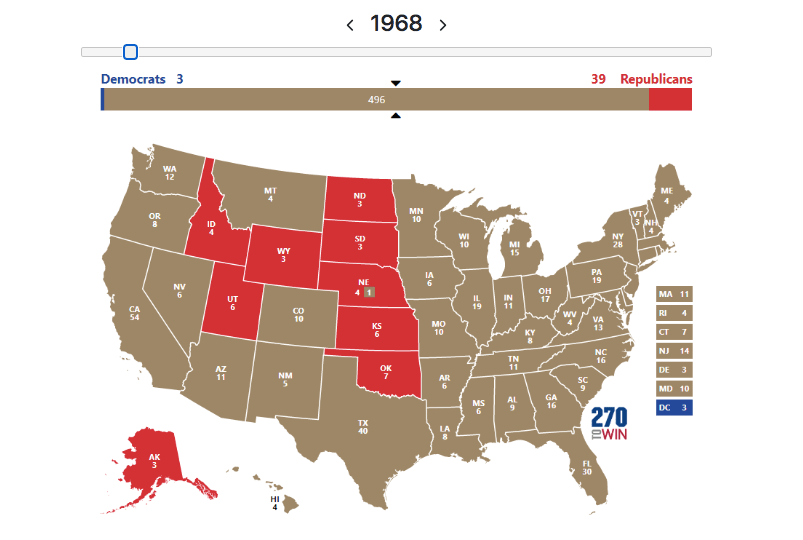
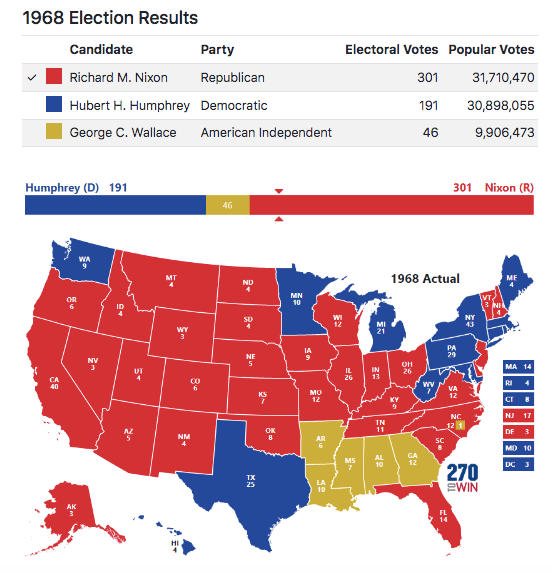
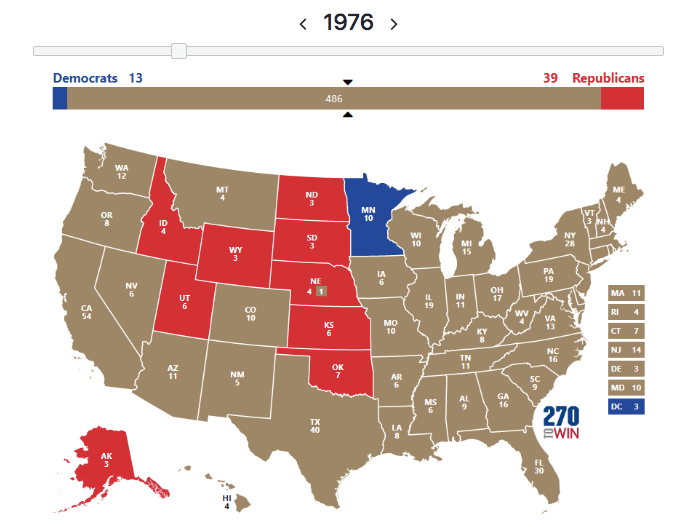


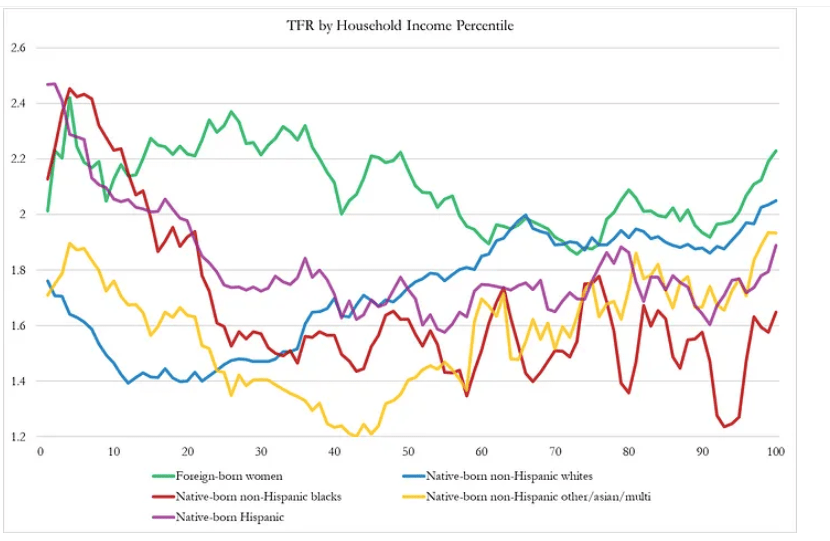




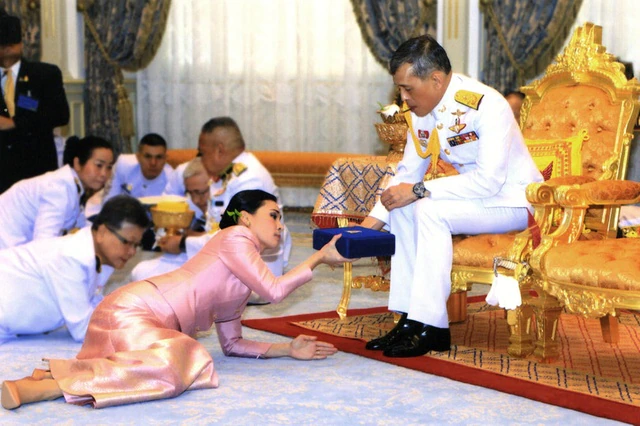


 thegeographicinvestor.com